French schools in Morocco: unprecedented tuition fee hikes starting next school year
Parents of students enrolled in French establishments in Morocco will face unprecedented tuition fee increases starting next school year. This financial turning point, marked by regular annual increases, is accompanied by a new development that is crystallizing tensions: the introduction of annual registration fees, a previously unseen measure in this network.
This decision is justified by the French authorities due to the state’s financial disengagement and the need to fill a structural deficit. Concretely, an increasing share of the financial burden is being transferred to families to finance the pensions and benefits of expatriate teachers. The major point of friction lies in the use of these funds: the sums collected are entirely transferred to France. They are not reinvested in local infrastructure, educational programs or the improvement of teaching conditions, leaving hubs like Rabat-Kénitra without direct benefit from this financial effort.
The incomprehension of parents is all the more acute as these annual registration fees do not exist in the public or private sector in France, nor within the network of the Office scolaire et universitaire international (OSUI). In addition, charges that previously fell to the French embassy, such as the management of the examination office or the salaries of diplomatic administrative staff, are now included in the tuition fees paid by Moroccan families.
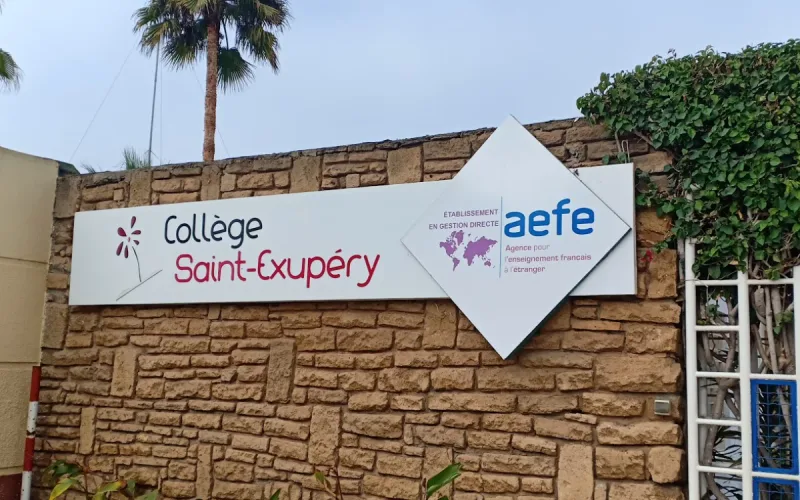
The mode of governance is also criticized, with decisions perceived as disconnected from the local reality as they are made directly in Paris. The project to rebuild the Saint-Exupéry middle school in Rabat illustrates this gap: the budget has increased from 6 to 18 million euros without the work starting, while the students continue to study in unsuitable temporary premises. This accounting management is starting to produce visible effects on the ground:
• A drop in enrollment of around 3% per year.
• The announced closure of the Ronsard school in Rabat and certain classes.
• The disappearance of strategic options and streams such as preparatory classes.
• The increase in class sizes, now exceeding 28 students.
This situation has ultimately broken the trust contract between the institution and the families. Parents denounce an overall deterioration of the service, marked by unreplaced teacher absences and repeated strikes, without any compensation. The prevailing sentiment is one of a two-speed justice system, where families in Morocco are called upon to pay off the debts of a system whose orientations and financial transparency they no longer control.