Droughts, Famines, Plague: How the 17th Century Upended Culture in Morocco
A study published by Cambridge reveals how the droughts, famines and epidemics of the 17th century drove Moroccan scholars to leave the major cities. This shift is believed to have durably strengthened rural culture and literature in the Amazigh language.
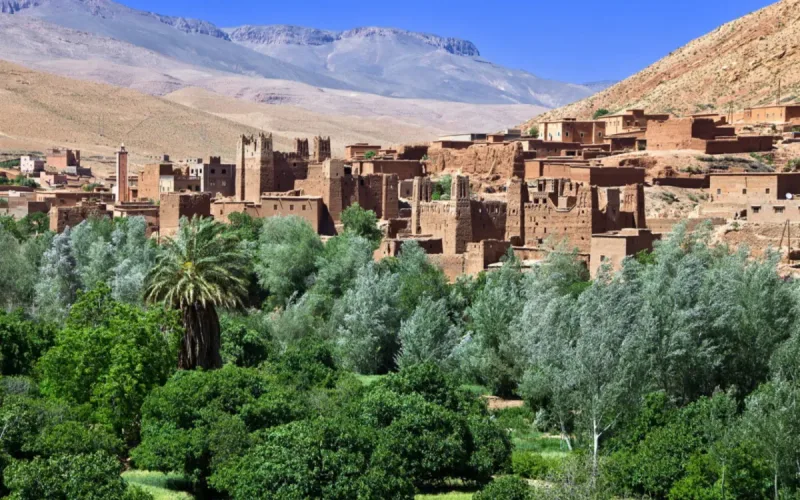
The environmental catastrophes that struck Morocco in the 17th century did not merely cause famines and thousands of deaths. They are believed to have profoundly transformed the geography of knowledge in the country, strengthening zaouïas and educational centers established in rural areas.
This is the thesis developed by Jonas Burkhard, a researcher at Yale University, in a study published on September 22 by the International Journal of Middle East Studies. To reconstruct this development, he cross-referenced the biographies of Moroccan scholars, chronicles from the period, data drawn from tree rings and a computer analysis of texts.
On Bladi.net : After the Drought, Essaouira’s Argan Forest Has Not Returned to Its Former State
The results show an increase in scholarly activity in rural areas among the generations who died after 1631. This shift took place during an exceptionally difficult period: the climate data used by the researcher reveal a long succession of drought years between 1607 and 1663, with particularly severe episodes in 1613, 1625, 1631 and 1661.
Fès Struck by Famine and Plague
In the cities, the consequences are believed to have been dramatic. A Judeo-Moroccan chronicle reports that the famine of 1613–1614 may have caused the deaths of 7 000 Muslims in Fès. Another historical source gives a figure of 4 600 deaths during the first months of 1614, in a city that then had approximately 100 000 inhabitants.
The shortage also led to clashes. In 1650, in the midst of a drought, the inhabitants of Fès Jdid are said to have cut off the water supply to those of Fès el-Bali, triggering violent fighting. The famine that began in 1661 is believed to have been even more destructive. A chronicle cited by the researcher claims that, in one district of Fès, 670 out of 700 men may have died. These old figures should be regarded as historical estimates, but they testify to the scale attributed to the catastrophe by contemporaries.
The famines were accompanied by epidemics. Fès and Marrakech are believed to have experienced several outbreaks of plague in 1605, 1606, between 1625 and 1627, in 1636, in 1662 and then between 1677 and 1680. A previous study cited by Jonas Burkhard estimates that the 1625–1627 epidemic may have killed up to 30% of the Moroccan population.
The major cities, connected to the main trade routes, were particularly exposed to the spread of disease. Mountainous or desert regions, by contrast, benefited from a colder or drier climate and an isolation that slowed contagion.
Rural zaouïas also had land, herds, springs and the support of surrounding communities. In Tamegroute and the Drâa Valley, dates were a resource resilient to periods of drought. The institutions of Dila, Iligh, Jbel Ayachi and Tamegroute thus offered students and scholars a security that the cities could no longer guarantee.
On Bladi.net : Morocco Ends Drought as Northern Floods Trigger Army Rescue
This shift is believed to have left a lasting mark on Moroccan culture. Analysis of the biographies and poetry of the period reveals a growing presence of landscapes, communities and rural references. Literature in the Amazigh language is also believed to have developed within this new network of educational centers.
For Jonas Burkhard, the countryside therefore did not simply serve as a refuge during a time of crisis. It contributed to the transformation of a scholarly culture previously dominated by urban elites, opening Moroccan intellectual production more broadly to rural territories and Amazigh culture.