
How the money of Moroccans living abroad saves the purchasing power of Moroccan families
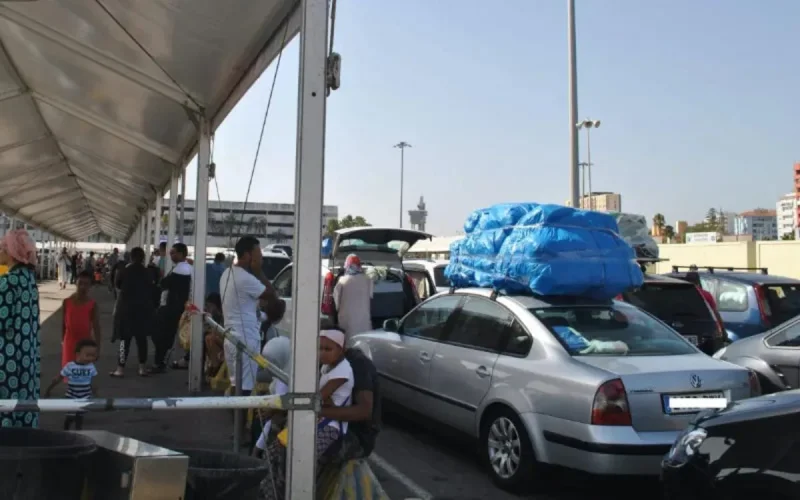
It is a trend that does not let up. Despite inflation in Europe and global economic difficulties, the Moroccan diaspora continues to massively send money back to the country. By the end of November 2025, transfers had reached 111.53 billion dirhams. A vital financial windfall that supports thousands of families, but which still struggles to be transformed into productive investment.
Moroccans living abroad remain the country’s primary source of funding. According to the latest statistics from the Office of Foreign Exchange, remittances have increased by 1.6% compared to the previous year. While the percentage may seem modest, the volume is colossal: Morocco has gone from around 60 billion dirhams in 2019 to a forecast exceeding 120 billion for the whole of 2025.
For economist Mohamed Jadri, cited by Hespress, this is not a temporary phenomenon related to Covid-19, but a strong structural trend. The link between Moroccans around the world and their homeland has been strengthened, becoming the true financial "oil" of the country.
The primary function of these billions is social. Between 65% and 70% of the transfers land directly in the pockets of Moroccan households. This money is used to pay bills, food, health or education of relatives who have remained in the country. In a context of high cost of living, these remittances act as an essential social cushion, guaranteeing social peace and supporting domestic consumption.
At the macroeconomic level, these currencies are a blessing for the State. They make it possible to replenish the foreign exchange reserves of the Central Bank (Bank Al-Maghrib). It is thanks to this money (and to tourism revenues) that Morocco can pay for its increasingly expensive imports (energy, cereals) and repay its external debt. However, economist Youssef Karoui El Filali qualifies this picture: if MRE transfers offer a safety margin, they mask a chronic trade deficit. Imports (+9%) are growing faster than exports. Morocco remains dependent on the outside world for its food and industry, a flaw that the money of the diaspora cannot fill indefinitely.
Investment is the black spot raised by experts. While family solidarity is exemplary, the direct economic contribution remains low.
• Only 10% of transfers are directed towards investment.
• Even worse, barely 1% concerns high value-added investments (industry, start-ups, technologies).
The vast majority of capital invested by MREs is still directed towards real estate (real estate) or small businesses (cafes, restaurants). For Mohamed Jedri, this is a missed opportunity. The challenge for the years to come will be to transform this savings into projects that create sustainable jobs, beyond the simple construction of a vacation home or family support.
Related Articles
-
220 dirhams on construction sites, up to 400 in the fields: Morocco lacks workers
25 August 2026
-

This Israeli company equips defense giants and also has clients in Morocco
24 August 2026
-

After three days in Algeria, a sanctioned Russian ship passes near Morocco
24 August 2026
-

In Brussels, a Moroccan name and being over 50: the profile most disadvantaged in hiring
24 August 2026
-

Morocco Has a New Billionaire Forbes Has Yet to Spot
24 August 2026