Casablanca Finance City: Why Global Banks Are Betting on Morocco
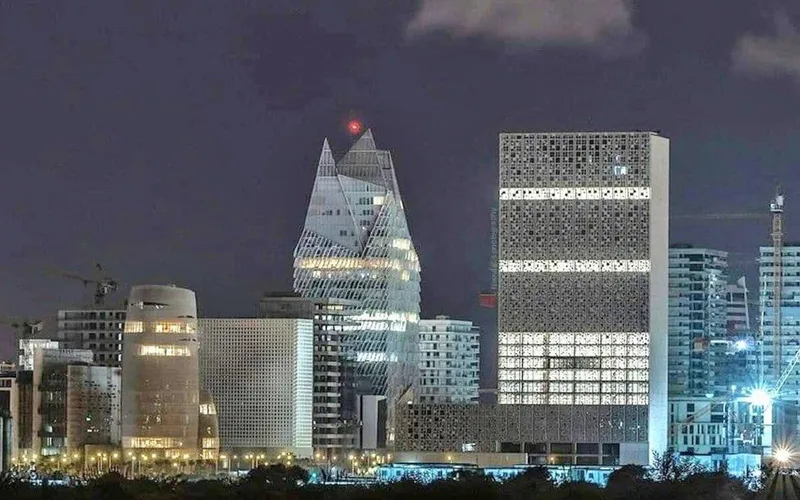
Morocco is gradually establishing itself as the continent’s financial hub, attracting major international banks such as Standard Chartered, Access Bank, and, most recently, SaudiExim Bank, which are setting up in Casablanca Finance City (CFC).

Thanks to its political stability and financial reforms, Morocco is now attracting major international banks. In less than two years, Standard Chartered, Access Bank, and most recently SaudiExim Bank have chosen to establish operations in the kingdom, specifically at Casablanca Finance City (CFC). “We remain focused on our own trajectory, one of consolidating our achievements and innovating in the service of Morocco and the continent. Our vision remains unchanged: to make Casablanca Finance City a leading regional hub by connecting international capital with Africa’s potential, fostering interregional partnerships, and creating bridges between investors and opportunities,” the Director of Strategy, Partnerships and Communications at Casablanca Finance City Authority told Challenge.
To read: Moroccan banks’ abuses denounced
In just over a decade, CFC has established itself as the leading regional banking hub. According to its 2023 activity report, the platform has more than 200 companies, including major international names in finance, consulting, insurance, and business services. It covers 115 countries. “Casablanca Finance City (CFC) is no longer merely a strategic gamble, but a fully established financial hub on the African continent,” the document states. For the seventh consecutive year, CFC leads the African ranking of the Global Financial Centres Index (GFCI), actively participates in major global events such as COP28, and supports green investment initiatives.
To read: Forbes: two Moroccan banks make the global top ranking
CFC’s strategy is gradually beginning to bear fruit. Beyond international partnerships such as the one with Frankfurt Main Finance, the platform has developed an ambitious local strategy, notably with the Casablanca-Settat Regional Council, to create the Africa Finance Institute. “This qualitative leap is based not only on an incentive framework, but also on the creation of a genuine ecosystem. By cultivating a stable, multilingual business environment focused on Africa, CFC is confirming that it is no longer a promise, but a credible interface for international capital. This time, the recipe is genuinely starting to work,” explains Zakaria Fahim, CEO of BDO, adding that “CFC’s move upmarket is real, both through its proactive governance and the consolidation of its offering: specific taxation, a dedicated geographic zone, a modernized legal framework, and a community of expertise.”
To read: Revolut is coming—should Moroccan banks be worried?
Saudi Exim Bank’s establishment in Casablanca is part of an expansion strategy in Africa developed since 2024. The bank has concluded several agreements, including a protocol with Shelter Afrique in 2025 for urban projects, credit lines worth 25 million dollars with Standard Bank in South Africa and Abu Dhabi Islamic Bank – Egypt (ADIB Egypt) in 2024, as well as partnerships with Ghana Export-Import Bank and Guinea in 2025. With the Saudi bank establishing operations in Casablanca, companies from that country will be able to structure their sales to Africa, while local exporters will benefit from dedicated credit lines to enter the Saudi and African markets.