Belgian-Moroccan students school equality opportunities Flanders
A study conducted in Flanders shows how some young Belgian-Moroccan students describe a school where displayed equality doesn’t always guarantee the same opportunities in their educational journey.
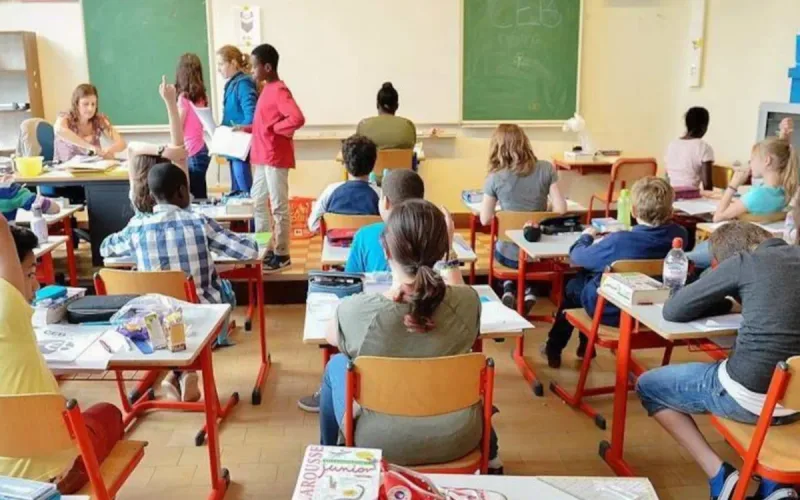
On paper, school is supposed to offer the same possibilities to all students. But in the accounts gathered from young Belgian-Moroccan students and their parents, this promise sometimes seems more fragile. It’s not always a single decision that poses a problem, but a succession of moments where the student feels they are not being helped, listened to, or evaluated in the same way.
On Bladi.net : Belgian-Moroccan Students Face School Guidance Discrimination
An equality that plays out in the details
The study, published in 2025 in Social Psychology of Education, is based on interviews conducted with fourteen parent-youth pairs of Moroccan origin, totaling 28 participants. The researchers analyzed how these families perceive school fairness in the Flemish system.
Their work shows that perceived inequality is not limited to academic results. It also appears in the way decisions are explained, in the support given to students, in the expectations expressed by certain teachers, or in the quality of classroom interactions.
Several young people interviewed thus report having lacked support at important moments in their educational journey. Some believe that students who needed the most help did not always receive the necessary support to progress or pursue a more ambitious educational path.
This feeling is even stronger when the student doesn’t clearly understand why a decision is made. A school recommendation, an orientation, or an evaluation can then be experienced as something imposed, without real opportunity for discussion.
In these accounts, injustice therefore doesn’t come only from a visible obstacle. It can arise from a lack of explanations, absent encouragement, lower expectations, or a look that seems to limit the student before they’ve even had a chance to show what they’re capable of.
The weight of expectations
The researchers also emphasize the importance of expectations in educational trajectories. For some young Belgian-Moroccan students interviewed, school didn’t always give them the feeling that their success was naturally expected. Several say they had the impression of having to demonstrate their abilities more to be taken seriously.
This mechanism can weigh heavily. When a student feels that less is expected of them, they may end up perceiving school not as a space of openness, but as a place where their place must constantly be justified. The study shows that this feeling can affect confidence, relationships with teachers, and the way young people interpret their own educational journey.
The authors note that students of North African origin, predominantly Moroccan in Flanders, already face significant educational inequalities, notably a stronger presence in less valued educational tracks and underrepresentation in higher education. In this context, the experiences shared by participants take on particular significance.
They don’t mean that every school difficulty is linked to origin. The study remains cautious and even shows that some participants hesitate to quickly attribute their experiences to discriminatory intent. But when the same impressions recur — lack of support, reduced expectations, misunderstood decisions — they end up feeding a broader feeling: that of not benefiting from exactly the same opportunities.
On Bladi.net : Belgian-Moroccan students Flemish system school discrimination
This study doesn’t claim to describe the entire Moroccan community in Belgium, nor the entire Belgian school system. It focuses on a limited sample in Flanders. But it highlights a sensitive question: school equality is not measured only by access to school. It also plays out in the attention, confidence, explanations, and encouragement given to each student.