Moroccan Parents Belgium School Injustice Generational Gap
A study conducted in Flanders reveals a generational gap. Several parents of Moroccan origin say they perceive, in their children, a more painful relationship with school and a stronger sense of injustice.
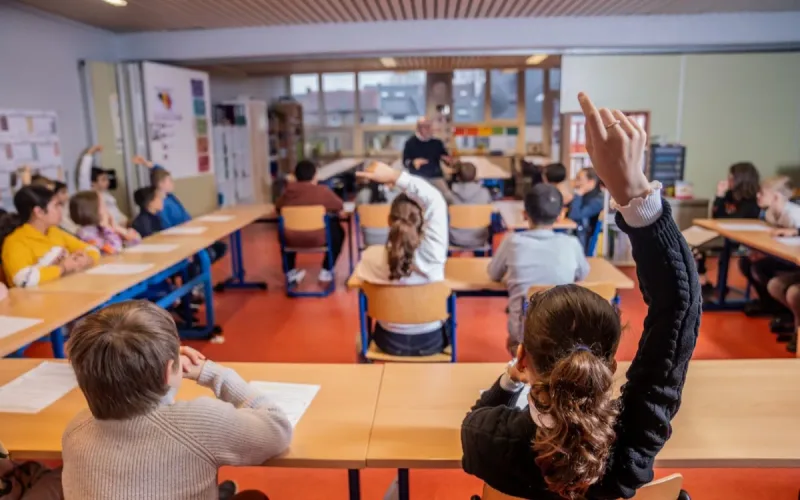
For many Moroccan families in Belgium, school remains associated with success, effort and hope for a better social trajectory. But a recent study also reveals a more sensitive reality: some parents feel that their children are experiencing a more difficult school experience than their own.
On Bladi.net : Belgian-Moroccan Students Face School Guidance Discrimination
A generational gap
The study, published in 2025 in Social Psychology of Education, is based on interviews conducted with fourteen parent-young adult pairs of Moroccan origin, totaling 28 participants. The researchers examined their perception of school justice in the Flemish system, particularly in relationships with teachers, guidance decisions and classroom treatment.
One of the most striking points concerns the comparison between parents and children. The authors note a shift in the narratives: young people more often mention experiences of school injustice than their own parents do. Several parents interviewed say they themselves feel that their children are more often confronted with situations experienced as unjust or discriminatory.
This finding is all the more striking because the young people in the sample are often more educated than their parents. Yet they more strongly describe the feeling of being underestimated, poorly guided or insufficiently supported in their school journey.
In the accounts collected, school is therefore not only a place of upward mobility. It also becomes a space where families observe more subtle wounds: lack of listening, decisions difficult to understand, expectations perceived as lower, or remarks that leave lasting marks.
Parents who validate the discomfort
The study shows that parents do not simply listen to their children’s accounts. They also participate in how these experiences are understood. The researchers explain that perceptions of injustice can be constructed and reinforced within the family context, when parents compare their own school experience to that of their children.
This generational gap does not mean that parents never faced difficulties. But in several interviews, they say they experienced a school they perceived as less marked by these forms of injustice. Conversely, they recognize in their children a stronger sense of discrimination or distancing.
School guidance often comes up in this discomfort. In the Flemish system, being directed toward a technical or vocational track can have lasting consequences for the rest of one’s path. For some Belgian-Moroccan young people, these decisions are not always experienced as neutral, especially when they seem poorly explained or difficult to contest.
On Bladi.net : Belgian-Moroccan students Flemish system school discrimination
The authors remain cautious. Their study does not claim to speak for all Moroccans in Belgium or for the entire Belgian school system. It focuses on a limited sample in Flanders. But it highlights a deep family concern: for some parents of Moroccan origin, their children’s school appears harder, more opaque and sometimes more hurtful than the one they had known.