Belgian Students Moroccan Origin School Discrimination Phrases
A study conducted in Flanders shows how certain remarks, sometimes presented as harmless, can durably mark young Belgian-Moroccans in their school journey.
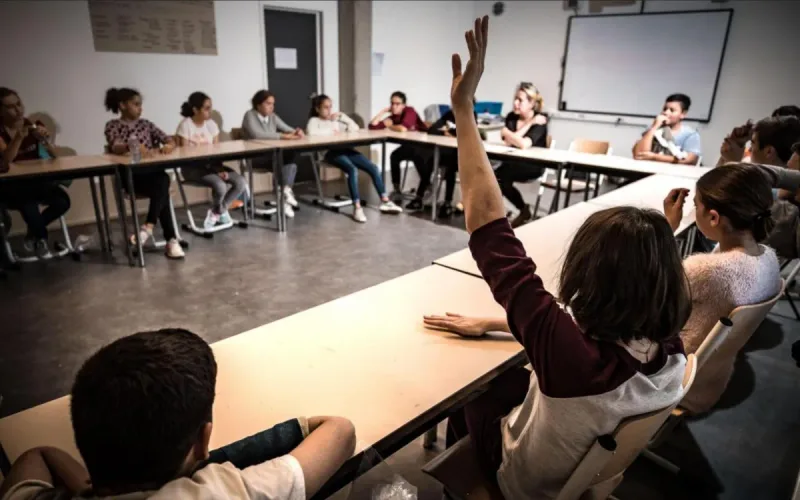
At school, injustice does not always take the form of a major orientation decision or an open conflict. It can also slip into a sentence, a comment, a remark about the level of Dutch or surprise expressed at the good results of a student of Moroccan origin.
On Bladi.net : Belgian-Moroccan Students Face School Guidance Discrimination
Remarks that are not forgotten
The study, published in 2025 in Social Psychology of Education, is based on interviews conducted with fourteen parent-young person duos of Moroccan origin, or 28 participants in total. The researchers were interested in their perception of school justice, particularly in relationships with teachers and treatment received in class.
Among the most striking experiences, the authors highlight insensitive remarks, racist comments or micro-aggressions. According to the study, 21 out of 28 participants reported such situations, whether experienced personally or observed at school.
These phrases are not always direct insults. They can also take the form of ambiguous compliments, for example when a student is congratulated with surprise for their mastery of Dutch. In the accounts collected, these remarks are sometimes experienced as a way of reminding the student that they are not fully considered as belonging to the majority group.
The study also mentions more violent statements, particularly racist or Islamophobic remarks reported by some participants. The researchers link them to the quality of the relationship between teachers and students, a central element in the feeling of being respected or not at school.
The feeling of having to prove more
These small phrases add to other school experiences. Several young people interviewed say they had the feeling that their abilities were underestimated or that expectations of them were lower. Some recount having to prove their worth more to be taken seriously.
For the researchers, these experiences are not always interpreted only as individual incidents. They can be understood through a collective belonging. A remark targeting a student of Moroccan origin, or even another student from a minority, can fuel the idea that "students like them" are viewed differently.
On Bladi.net : article 121162
The study remains cautious: it does not claim to speak on behalf of all Moroccans in Belgium or the entire Belgian school system. It focuses on a limited sample in Flanders. But it highlights a discomfort that is often discrete: for some young Belgian-Moroccans, a simple sentence heard in class can leave a lasting mark.