Barcelona's Hidden Crisis: Shantytown Shadows High-Speed Future
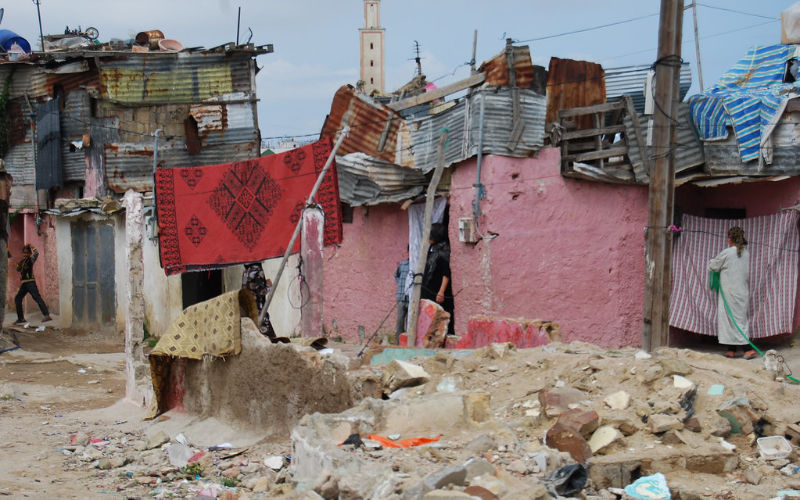
In the Barcelona neighborhood of La Sagrera, a shantytown is growing in front of the construction site of the future high-speed train station. While the city plans to build a large park, as well as hotels and housing in this area, dozens of homeless people are setting up makeshift shacks, some of whom are of Moroccan origin.
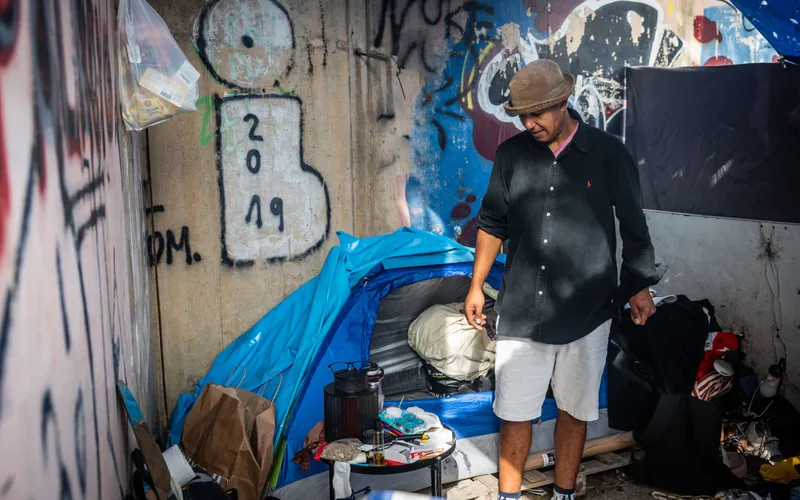
Around a hundred shelters have been set up, mainly around the high-speed train station construction site. These precarious dwellings that are spreading in all directions will one day be demolished. The city plans to build the largest park in Barcelona in this area, dozens of hotels, thousands of homes and businesses. For now, the authorities have not decided on the fate of the inhabitants of this shantytown.
Abdel, 36, has been living across from the construction site for at least two years. Originally from Fez, Morocco, he had to move a few months ago after having his scrap metal stolen several times. He then settled on the other side of a fence around the construction site, setting up his tent between two walls. To access it, you have to go down a slope covered in waste, clinging to rusty iron bars. "Some of the latest arrivals sometimes come to steal from you. Many have settled near the Treball Digne bridge," he tells La Vanguardia. "There are more and more people every day. I’m more relaxed here."
To settle in this shantytown, you have to get the agreement of the closest neighbors. The Eastern European Roma, the most discreet and suspicious, occupy the upper part. Grouped in families on three small fenced-in plots, they are the first to settle on the site. Their shacks are the best equipped: solar panels, garden tables, children’s toys, potted plants, stoves and verandas. Around them, about thirty precarious adjoining small houses mainly shelter young men of Maghrebi origin. Without water, electricity or gas, they nevertheless strive to maintain a certain dignity around their homes.
Abdel, whose passport and residence permit have expired for years, explains that scrap metal is becoming increasingly difficult to find. "It’s the fault of the consulate, they don’t help you renew your passport. There’s no way to find a normal job like that," he says, showing several training certificates. The Moroccan has erratic income. "One day you earn 50 euros with scrap metal, and the next day you earn almost nothing, and you don’t even have the means to pay for housing," he laments. And he adds: "Then you spend it all at the supermarket on ready-made meals, because you don’t know how to cook, and on hot milk coffee." Abdel showers every day at the beach where he also does his laundry.
Abdel says "the police come from time to time, especially when they’re investigating a theft or something like that, to question us, and if they see a butane bottle on you, they confiscate it for safety reasons. Social services often come to take notes. Many have a supervisor." Residents confirm that the situation is only getting worse. What disturbs them the most is being constantly confronted with so much poverty. This shantytown had existed in this area in the middle of the last century, where some 5,000 people lived. In the late 1980s, the shantytown was razed to make way for the Sant Martí park.