Alstom’s New TGV Carries First Passengers in France; Morocco Has Ordered 18
The SNCF’s new TGV carried its first passengers on Friday, November 6, between Paris and Marseille. It marks the debut of Alstom’s Avelia Horizon platform, of which Morocco has ordered 18 trainsets to extend its high-speed rail line to Marrakech.
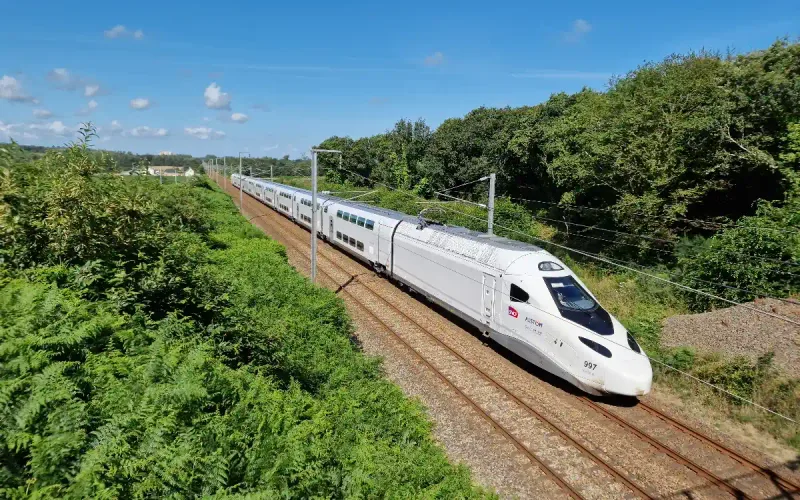
The new train left Paris-Gare-de-Lyon on Friday morning and reached Marseille at around 1 p.m., marking the start of commercial service. Known as the TGV M during development, it is the fifth generation of French high-speed trains. In a statement published on November 6, Alstom confirmed that it is the first model in its Avelia Horizon range to carry passengers.
The French manufacturer has completely redesigned the architecture of this generation. Its two power cars, shorter than those of previous TGVs, free up enough space to add a ninth passenger car, compared with eight before, without increasing the train’s overall length. All passenger cars have two levels. This new layout makes it possible to offer up to 20% more seats, with a maximum capacity of 740 passengers, depending on the configuration.
Alstom also says the train uses 20% less energy than the previous generation. With more passengers on board, the saving reaches 32% per passenger per kilometre at full capacity. The manufacturer also claims maintenance costs will be reduced by more than 30%, thanks to simplified equipment and systems capable of anticipating some failures.
In France, SNCF has opted, among other features, for a bar car spread over two levels, spaces that can be reconfigured between first and second class, and a system that allows wheelchair users to board independently. The Avelia Horizon platform allows different interior layouts to meet operators’ needs.
Eighteen trains of this generation expected in Morocco
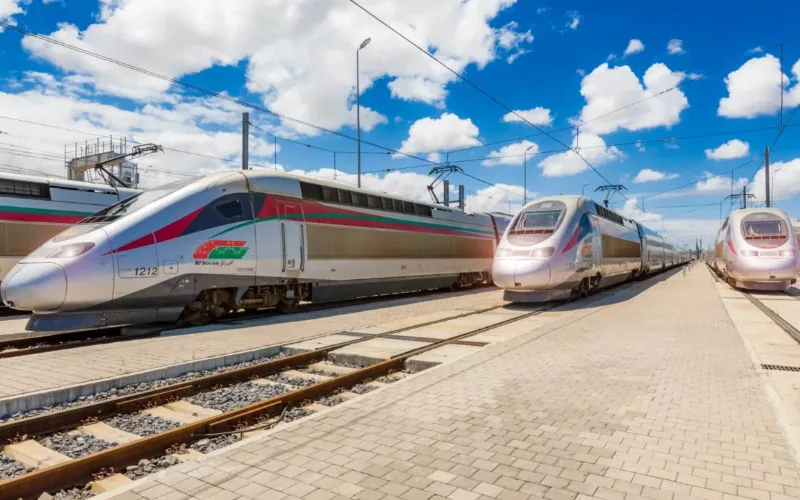
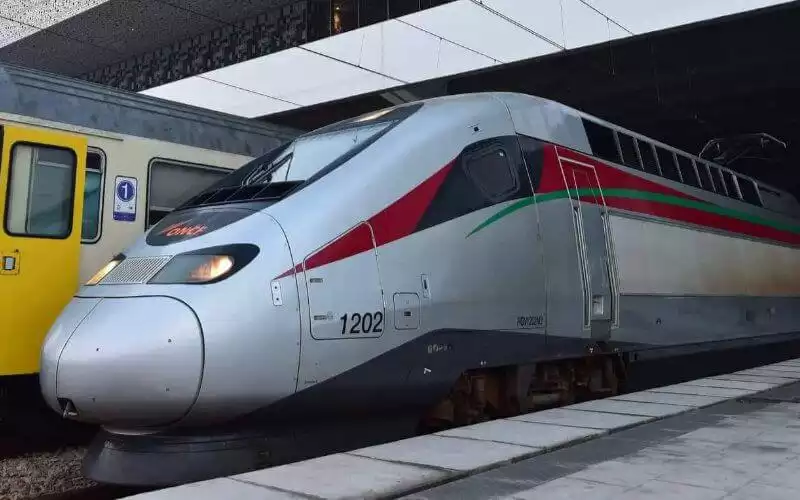
The National Office of Railways (ONCF) signed its contract with Alstom on March 28, 2025. The order is for 18 double-decker Avelia Horizon trainsets capable of exceeding 300 km/h. It is backed by €781 million in financing from the French Treasury. The trains are intended for the extension of Morocco’s high-speed rail network to Marrakech.
The project includes around 430 kilometres of new railway between Kénitra and Marrakech, via Rabat and Casablanca. The infrastructure is designed for speeds of 350 km/h. According to forecasts presented by the Moroccan government, the Tanger-Marrakech journey will be cut to 2 hours 40 minutes, a saving of more than two hours. Tanger-Casablanca is expected to take 1 hour 40 minutes, while Rabat will be connected to Casablanca’s Mohammed V airport in 35 minutes, with service to the new Benslimane stadium. A maintenance centre for the high-speed trainsets is also to be built in Marrakech.