Algerian Army Accused of Border Encroachment on Moroccan Territory
Recently released satellite photos show the appearance of ground markers in the Ich border area, which falls within Morocco’s Figuig province. According to specialized sources, these markers may have been installed by the Algerian army inside Moroccan territory, reigniting residents’ fears five years after farmers were expelled from the Arja area.
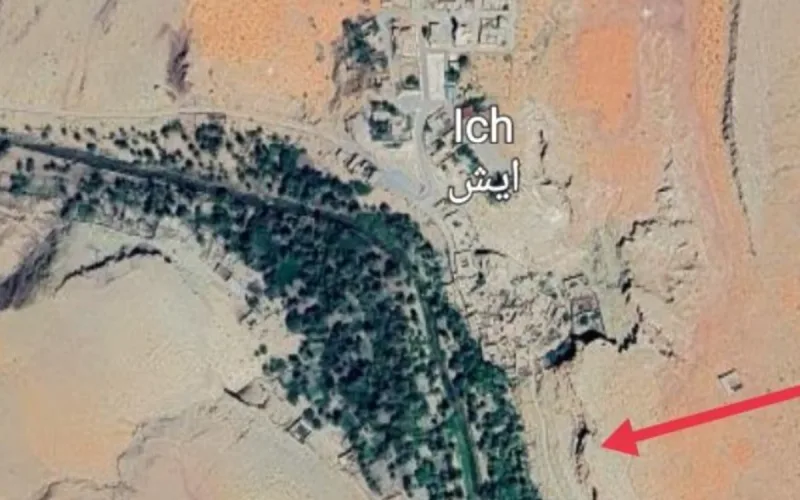
Concern is once again growing in Morocco’s Oriental region. Satellite observation images, shared by specialized accounts and cited by Barlamane, point to alleged unilateral movements along the border with Algeria. The images, centered on the locality of Ich (coordinates 32°30′ N and 1°00′ O), reveal a series of white points arranged in the palm grove, interpreted as provisional territorial boundary markers placed by members of the Algerian army.
Read also: Three Moroccans killed by the Algerian army
Although visual analysis confirms the presence of these clear markers, contrasting with the bare ground on the edge of the fertile Zouzfana wadi area, no deployment of heavy machinery or troop movements can be seen in the still images. However, this alleged activity has taken place without any official response from Rabat. At least for the moment.
Read also: Three Moroccans killed in Béchar: questions raised by Algeria’s use of force
This development revives the trauma of March 2021, when farmers from Figuig were barred by the Algerian authorities from accessing the Arja area. The decision resulted in the loss of around 1,450 hectares of farmland and the abandonment of approximately 33,000 date palms, causing damage estimated by local residents at more than ten million dirhams.
Algiers regularly justifies tightening its border controls by citing the fight against drug trafficking and organized crime. An argument rejected by local associations in Figuig, which denounce “collective dispossession” and political pressure on civilian populations whose only source of income is agriculture.