The Other World": Why Young Moroccans and Algerians No Longer Know Each Other
Despite the warm welcome given to Algerian supporters during the Africa Cup of Nations in Morocco, relations between the two populations are undergoing constant erosion. Between the closure of land borders since 1994, the diplomatic rupture of 2021, and the influence of social networks, the historical link that united the two countries seems to be fading in favor of mutual ignorance.
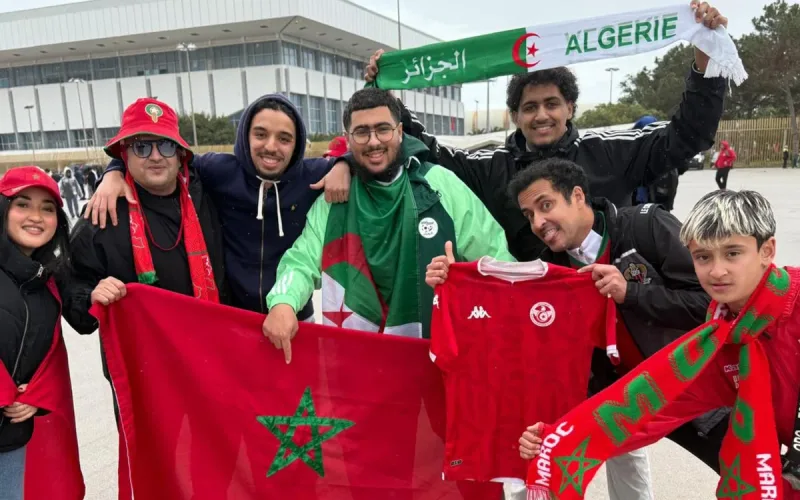
In the heart of Casablanca, the Algerian presence remains visible through families who have been settled there for several decades, like Mohamed Senoussaoui, a former liberation war fighter who arrived in Morocco in 1974. While this generation maintains a deep attachment to both nations, the current climate is marked by an exacerbated political rivalry. Since 2024, Algiers has imposed a visa on Moroccan nationals, while air traffic is prohibited between the two neighbors. Yet, in the city’s souks, Fennecs jerseys are freely sold for around 9 euros (100 dirhams), testifying to a persistent hospitality in everyday life.
However, the tournament also revealed points of friction. Algeria’s elimination in the quarter-finals against Nigeria provoked incidents on the pitch and in the stands, leading to the opening of an investigation by the Confederation of African Football (CAF) on January 12. These events, amplified by social networks, have crystallized the resentments. According to testimonies reported by the newspaper Le Monde, some Algerian residents say they are shocked by the reactions of joy from part of the Moroccan public after the Fennecs’ defeat, seeing in it a hostility they did not suspect before.
For researchers, this gap is first and foremost generational and structural. Anthropologist Khalid Mouna observes that Moroccan youth no longer know Algeria, now nicknamed "the other world" in the collective imagination. While the elders nostalgically evoke trips by train or by road, the new generations are turning their gaze more towards other economic horizons. This physical separation is accentuated by a "virtual hatred" fueled by misinformation and digital controversies, such as the case of an Algerian influencer imprisoned for indecent behavior in a stadium in Rabat at the beginning of January.
The demographic decline illustrates this underlying trend. In 2024, Morocco had only 2,800 Algerian residents, three times less than twenty years ago. For sociologists, this decrease, combined with the complexity of travel that now requires transit through a foreign country, confirms that the two populations are experiencing a separation that goes beyond the framework of simple diplomatic crises.