Without Their Black Coating, Moroccan Pottery Remains in Workshops
A decision banning the use of tar on certain pottery items is worrying artisans in Rabat. In the middle of the summer season, customers are refusing containers stripped of their traditional black coating, and unsold stocks are piling up.
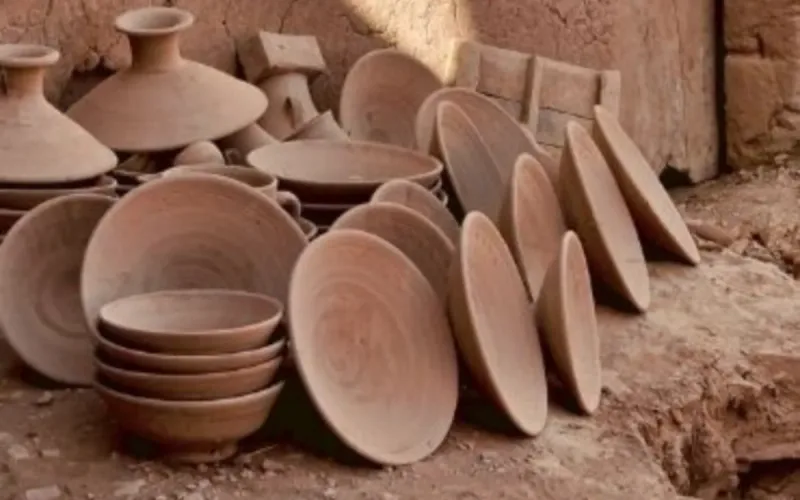
Earthenware jugs and jars are traditionally coated with a black substance described by professionals as a natural tar derived from cedar wood. This process, passed down through several generations, is said to be one of the features sought by consumers.
On Bladi.net : Carpets, pottery, leather: The whole world is snatching up "Made in Morocco" products
Since the ban, sales have reportedly slowed sharply. One workshop in Rabat had planned to produce between 1,000 and 2,000 pieces for the summer, a period when demand is usually at its highest.
Its manager says that many pottery items are now remaining stacked up. Some female customers reportedly gave up on buying jugs after learning that they were no longer coated with the black substance, reports Al3omk.
Natural tar versus dangerous mixtures
The artisans are asking the authorities to distinguish their traditional preparation from mixtures made clandestinely. According to them, some producers allegedly add used oils, which could pose a danger to consumers.
The professionals’ representative nevertheless acknowledges that he does not have the scientific studies that prompted the ban. The authorities reportedly cited health risks, which he says he can neither confirm nor dispute.
On Bladi.net : Tonight on France 3: Morocco becomes the majestic setting for "Voyage Voyage
The measure also affects the merchants who decorate and resell these products. The artisans are therefore calling for checks on the composition of the materials used rather than a general ban.
While awaiting clarification, a single workshop in Rabat is left with up to 2,000 pieces prepared for the summer that are now difficult to sell.