
30 % unemployment among young Moroccans: Brussels turns to sport and culture
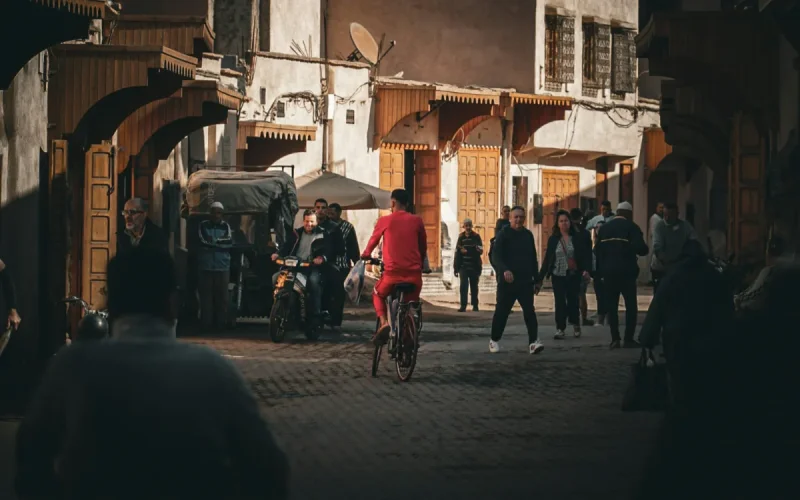
The European Commission establishes a direct link between youth unemployment, the mobilizations that emerged in Morocco in late 2025 and the country’s stability. Brussels is releasing 16 million euros, but is placing greater emphasis on civic participation, sport and culture than on the direct creation of jobs.
More than seven million Moroccans are between 15 and 29 years old, and their unemployment rate stands at 30 %. For the European Commission, this situation is no longer merely an economic problem: it now represents an issue of social cohesion and stability in a strategic neighbor of the European Union.
The assessment appears in the official “Morocco: active and creative youth” program, adopted as part of the European measure in support of Morocco for 2026. Brussels also notes the inequalities between cities and rural areas, as well as young people’s limited access to spaces for civic participation.
The Commission explicitly refers to the youth mobilizations observed at the end of 2025. According to it, these movements expressed a growing demand for participation in decision-making, social justice, access to public services, equality and recognition.
The document thus echoes the GenZ 212 demonstrations, during which young Moroccans had called for hospitals and schools rather than stadiums. Unemployment, healthcare, education and corruption were among their main demands at the time.
On Bladi.net : Morocco’s Youth Uprising: GenZ 212 Sparks Nationwide Protests Ahead of King’s Address
For Brussels, empowering young people in this context constitutes “a key factor” in social cohesion and stability in Morocco. The Commission even specifies that this stability serves the European Union’s own interests. It therefore no longer presents Moroccan youth policy as a strictly domestic issue.
This assessment comes as overall unemployment fell to 9.5 % in the second quarter of 2026. However, this improvement masks a much more difficult situation among young people, women and residents of certain regions.
A response that is more social than economic
The European Union will allocate 16 million euros to the program over an indicative period of 72 months. But despite the diagnosis of unemployment, the proposed response does not take the form of a vast European job-creation plan.
The announced sectoral allocation reserves 45 % of the initiative for youth policy and civic participation, 35 % for culture, 10 % for gender equality and only 10 % for developing young people’s skills.
The program is notably intended to strengthen youth centers and women’s centers, support associations, develop digital skills and promote sport, volunteering and joint cultural projects between Morocco and Europe. Links with Erasmus+ and the European Youth Guarantee scheme are also being considered.
On Bladi.net : In Morocco, 2.9 million young people are not working, studying or receiving any training
The Commission recalls that 2.9 million young Moroccans were not working, studying or undergoing training in 2023. More than one in three people aged 15 to 29 was therefore outside employment and the education system. Around 70 % of these young people were women.
Brussels also plans to use the 2030 World Cup as a tool for social transformation. The aim is to mobilize tens of thousands of young people in volunteering, sport and civic initiatives, in order to strengthen their sense of belonging and participation in public life.
The European reasoning is clear: without spaces for expression, prospects and genuine participation, unemployment and disengagement from education risk fueling disengagement and new tensions. For the European Union, helping Moroccan youth is therefore as much a matter of social development as of stability in its neighborhood.
Related Articles
-

The prefecture ignores her request: this Moroccan woman obtains 48 hours, 1,500 euros and 150 euros per day
26 August 2026
-

Washington advises against urban buses in Morocco and deems the police response “inconsistent”
26 August 2026
-

He Explains Why Young People Flee to Ceuta: Moroccan Imam Suspended
26 August 2026
-

Diverted to Tétouan, a Barcelona–Tangier flight ends with the gendarmerie on board
25 August 2026
-
Ceuta: 27 exchanges in one day between Nasser Bourita and Spain’s foreign minister
25 August 2026