
Trump Morocco Phosphate Deal Angers Spanish Farmers
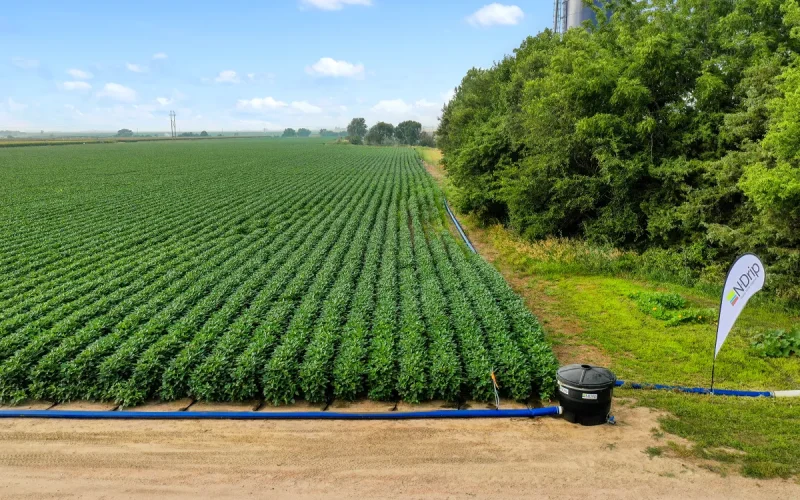
Donald Trump’s decision to temporarily suspend certain tariffs on Moroccan phosphate fertilizers is being closely watched in Spain. For part of the Spanish press, this move further strengthens Morocco at a time when European farmers are already denouncing rising costs.
Washington chose to act quickly. Through an emergency proclamation, the American president authorized temporary entry, without certain anti-dumping and countervailing duties, of phosphate fertilizers from Morocco. The stated objective is to secure the supply of American farmers, facing tensions in the global fertilizer market.
On Bladi.net : article 122227
The measure is set to last a maximum of eight months, or end sooner if the emergency declared by the American administration is lifted. For the White House, American capacities are insufficient to cover immediate agricultural needs, while Morocco is presented as a supplier capable of ensuring uninterrupted deliveries.
Viewed from Spain, this decision takes on another dimension. The daily newspaper El Debate sees it as a favor granted to Morocco, but also as a revealing indicator of the European Union’s difficulties in responding quickly to its farmers’ concerns. The contrast is judged all the more striking because Spain already views Morocco as an increasingly solid agricultural competitor.
Spanish farmers have been denouncing cost pressures for months, particularly those of inputs, energy, and fertilizers. In this context, seeing the United States temporarily open the door to Moroccan phosphates fuels the idea that Washington protects its agricultural sector faster, while Europe advances with more constraints.
Morocco Gains Weight Against Europe
The issue is not limited to fertilizers. For Spanish media, it fits into a broader trend: Morocco is becoming an important agricultural partner for the United States, while remaining a direct competitor for Spain on several products. This dual position irritates part of the Spanish agricultural sector.
Morocco already benefits from strategic weight thanks to its phosphates. In a period marked by geopolitical tensions and supply chain disruptions, this resource becomes a major economic lever. Phosphate fertilizers are essential for major crops such as corn, soybeans, and wheat.
In Europe, the situation is more complex. The European Union must contend with sanctions and duties applied to Russian and Belarusian fertilizers, while trying to limit the bill for its own farmers. Brussels did suspend certain duties on nitrogen fertilizers to reduce costs, but this response is insufficient to calm all sector criticism.
For Spanish farmers, the problem is also political. They believe that European rules, environmental constraints, and trade policies often place them in a less favorable position than their competitors. Morocco regularly comes up in this debate, particularly when it comes to fruits, vegetables, or market access.
Trump’s decision thus gives new visibility to the kingdom. It shows that Moroccan phosphates are not only a strategic raw material, but also a tool of influence in global agricultural balances. For Washington, it is about protecting its harvests. For Madrid, it is a new signal of the weight gained by Rabat.
On Bladi.net : Spanish Farmers Protest EU’s Tomato Import Policies Amid Morocco Competition
Spanish irritation stems from this: while European producers demand quick responses to rising costs, Morocco benefits from a strong gesture from the world’s leading power. A temporary decision, but sufficient to remind that the kingdom has become essential in the global battle for fertilizers.
Related Articles
-

In Sebta, a strange Moroccan drone appears at the worst possible moment for Spanish police chiefs
20 September 2026
-

Senior Spanish official calls Sebta and Melilla “colonies” and demands a referendum
20 September 2026
-

“Return Sebta and Melilla to Morocco”: an opinion piece published in El País sets Spain ablaze
20 September 2026
-

In Sebta, hospital keeps five Moroccan women after giving birth: “Otherwise, they will end up on the streets”
19 September 2026
-
The day before 72,000 crossings from Morocco, the CNI had issued a warning: the judge wants to know who knew what
19 September 2026