Spinosaur Salt Glands Morocco Dinosaur Discovery
Spinosaurs, these carnivorous dinosaurs with crocodilian jaws, may have possessed salt glands above their eyes. This unprecedented adaptation would have allowed them to survive in brackish waters, reigniting the debate over their semi-aquatic lifestyle.
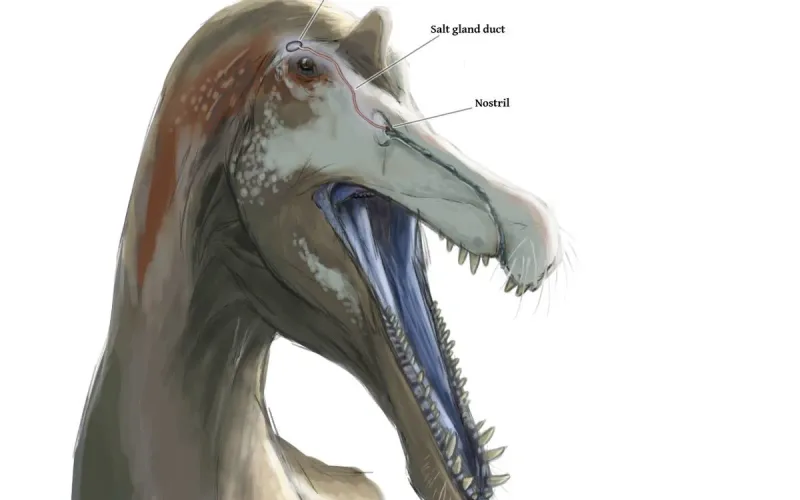
A recent study conducted by paleontologist Andrea Cau reveals the potential presence of salt glands in several spinosaur species. These predators would have evacuated excess salt in the form of tears, as highlighted by Science magazine. Researchers identified a distinct cavity above the orbit of certain skulls, believed to house this gland and its blood vessels. These detailed conclusions are published in the specialized journal Historical Biology.
On Bladi.net : Moroccan Fossil Discovery Unveils Thriving Dinosaur Diversity Before Extinction Event
This anatomical discovery constitutes the first complete set of skeletal evidence of a supra-orbital gland in a non-avian dinosaur. It offers a major physiological solution for these large animals, directly confronted with the stress imposed by high-salinity environments. Managing this salt surplus proves essential for surviving and feeding in brackish environments such as estuaries or marshes.
If this hypothesis is confirmed, it would strengthen the idea that these theropods, already known for their taste for fish, occupied a much more aquatic ecological niche. They would thus distinguish themselves even further from other large terrestrial predators, in the process modifying the overall understanding of ancient ecosystems. However, Andrea Cau clarifies that the biology of this dinosaur is not limited to its aquatic adaptations alone.
The scientific community nevertheless maintains a degree of caution. Some Spinosaurus skull fragments, discovered notably in Morocco, do not systematically present this famous bony pocket. This absence leaves open the possibility that the observed cavity is a fossilization artifact rather than a genuine trait shared by the entire species.
On Bladi.net : Study Suggests Earliest Dinosaurs May Have Roamed Sahara and Amazon
Despite these uncertainties, this study provides paleontologists with a valuable new analytical framework. These skeletal clues will make it possible to re-examine museum collections to highlight fossils previously considered too incomplete for behavioral analysis. In the meantime, the question of whether these dinosaurs actively swam or merely waded to hunt remains wide open.