An Extraordinary Dinosaur Discovered in Morocco
An international team has unearthed the remains of an ankylosaur dating back 165 million years in central Morocco. This exceptional discovery reveals that the defensive weapons of these dinosaurs appeared far earlier than previously thought.
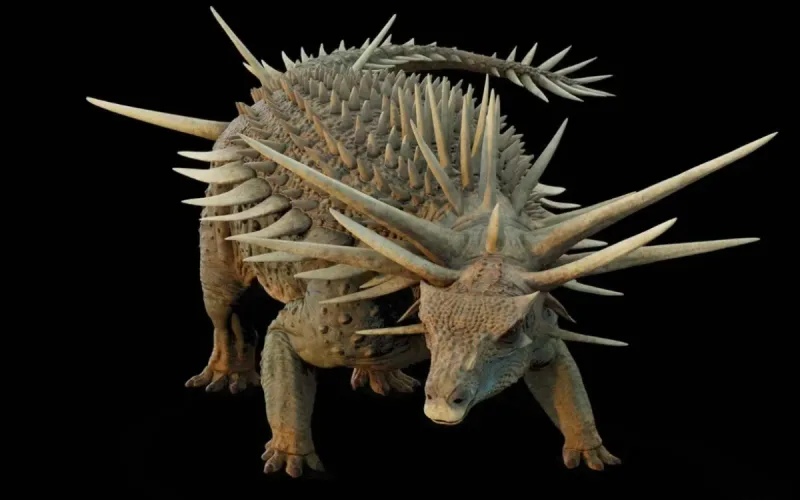
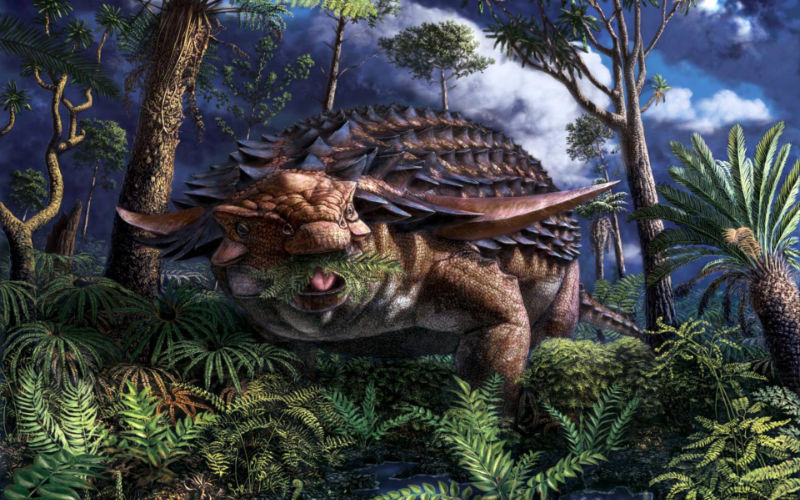
The excavations took place in the Middle Atlas mountains, at nearly 1,900 meters altitude. Paleontologists extracted new fossils of Spicomellus afer, a heavily armored herbivorous dinosaur. Dating from the Middle Jurassic, it represents the oldest ankylosaur specimen ever identified on the planet.
On Bladi.net : Paleontology: An Unknown Herbivorous Dinosaur Discovered in Morocco
According to an article published by The Conversation, these unprecedented bones include pointed ribs measuring nearly one meter, a cervical half-ring, and parts of the pelvis. Remarkably, some defensive spikes were directly fused to the animal’s skeleton. These pieces, preserved at Sidi Mohamed Ben Abdellah University in Fez, complete the species identification begun in 2021 from a single rib.
The study of these remains challenges scientific certainties about the evolution of this group. The dinosaur possessed a rigid tail equipped with fused vertebrae, acting as a formidable shield against predators. These complex weapons therefore developed millions of years earlier than estimated, likely serving both as a defense mechanism and social display.
Expeditions in this rocky zone, located 150 kilometers south of Fez, remain grueling due to scorching sun, strong winds, and winter snow. The fossils lay in reddish sedimentary rocks, geological witnesses to the region. In that distant era, this territory harbored a warm climate, rivers, and floodplains close to a marine environment.
On Bladi.net : Bizarre 165-Million-Year-Old Armored Dinosaur Unearthed in Morocco Stuns Scientists
This major breakthrough is the result of close cooperation between Moroccan, British, and American experts. Further in-depth anatomical and tissue analyses are already planned on these precious bones. The teams also intend to continue their field explorations to refine understanding of these North African dinosaurs and their ancient habitat.