Spain Seeks EU Action Over Google Maps’ Disputed Morocco Borders
Two dotted-line borders and Google Maps is at the center of a new European battle. A petition is continuing to be examined by the European Parliament in an effort to force the US giant to change how it depicts Sebta and Melilla. The case could lead to sanctions under European digital regulations.
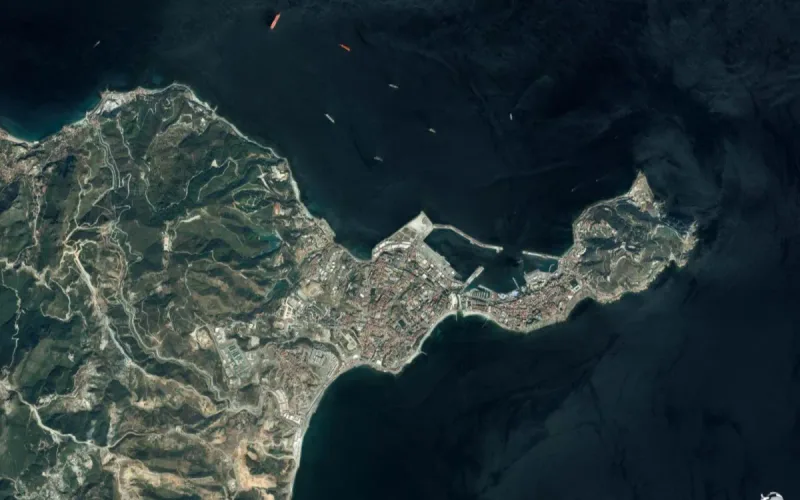
Could a few gray lines on a map cost Google billions? According to Spanish daily El Español, coordinators of the European Parliament’s Petitions Committee decided last week to continue examining a request challenging how Sebta and Melilla are represented on Google Maps.
The case, registered under number 2284/2026, challenges the dotted lines separating the two cities from Morocco. According to Google’s own mapping rules, this marking indicates territorial boundaries on which the parties concerned do not agree.
On Bladi.net : Ceuta and Melilla: Google Maps’ dotted lines that anger Spain
This representation, visible for several years, has angered Madrid. Spain considers Sebta and Melilla to be an integral part of its territory, while Morocco claims sovereignty over the two cities.
The petition’s authors believe the dotted lines create confusion about the European Union’s external borders. They are asking Brussels to require Google to use a solid line, like those used for undisputed international borders. Their argument: the two cities are not on the United Nations’ list of territories to be decolonized.
Could Google face a fine worth billions?
The initiative invokes the European Union’s Digital Services Act (DSA), which imposes specific obligations on major platforms. Google Maps is among the services directly monitored by the European Commission, particularly over risks related to disinformation.
The law provides for penalties of up to 6% of a company’s annual global turnover. For Alphabet, Google’s parent company, El Español cites a theoretical amount close to 24 billion dollars.
However, such a penalty would depend on the European Commission opening an investigation and finding that a violation had occurred. For now, the matter concerns the examination of a parliamentary petition. Its proponents want Brussels to determine whether the representation of the borders constitutes a breach of European obligations.
The mapping dispute has already caused several incidents in Spain. In September, the Spanish government had to withdraw a map from its own real estate portal after a similar line around Sebta and Melilla was discovered. The document had come from another mapping service.
Google Maps, for its part, has kept the dotted lines. After years of protests and a new appeal to the US giant in September, its Spanish critics are now trying to bring European institutions directly into the matter.