The secret of the Gibraltar orcas revealed: They speak a unique language in the world!
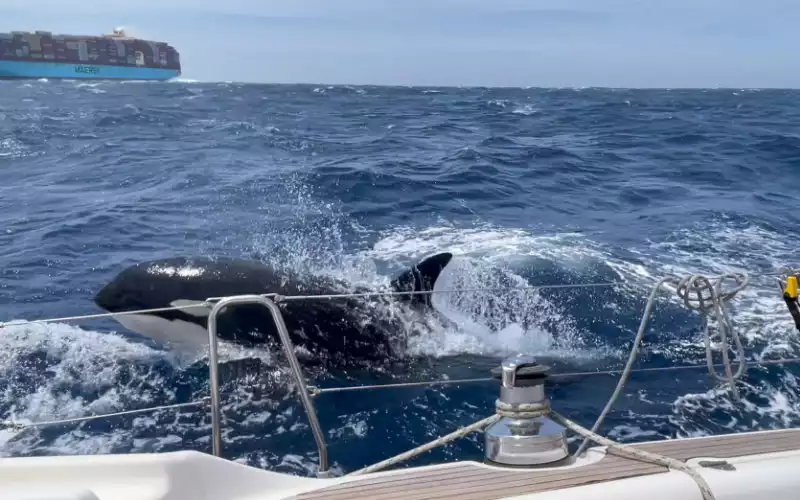
The mystery surrounding the interactions between orcas and vessels in the Strait of Gibraltar has just taken a decisive step forward thanks to the latest research advances. While these muscular confrontations have been worrying sailors for several years, a recent scientific study sheds light on a fascinating peculiarity of these marine mammals: they possess a language that is unique to them, totally distinct from that of their counterparts around the globe.
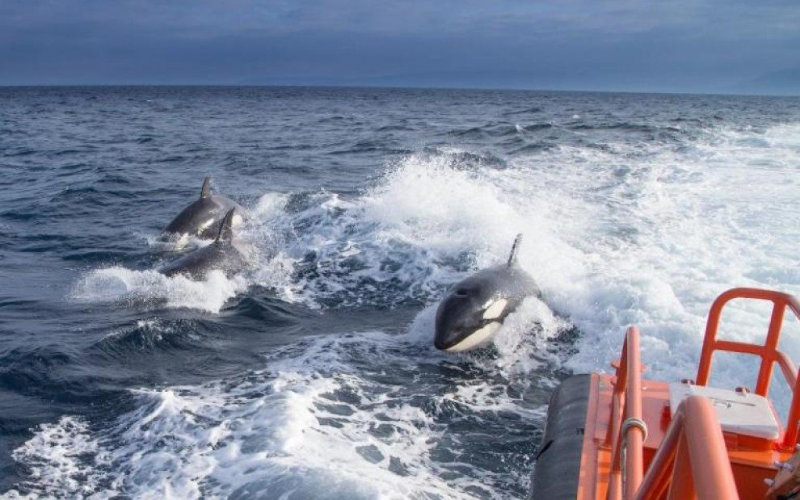
Researchers equipped with state-of-the-art underwater acoustic devices have closely scrutinized the group dubbed Gladiator, led by the female White Gladis. Their work has made it possible to isolate four specific types of calls that do not correspond to any communication recorded before in the species. Dr. Renaud de Stephanis, president of the CIRCE organization, compares this finding to the discovery of an unknown human language. The structural differences between this local dialect and those of the Pacific or North Atlantic populations are so marked that they are akin, according to him, to the gap between Arabic and Latin.
Far from being an innate gift, this linguistic mastery is the result of rigorous social learning. These Iberian orcas, who are used to remaining silent so as not to give the alarm, have developed a stealthy hunting strategy to track tuna, a fish particularly sensitive to the slightest noise. Young individuals must therefore make a concerted effort to acquire the vocabulary and grammar of the group from the adults. This cultural transmission is essential as it allows them to share the survival techniques necessary to flush out their prey in the waters of the strait.
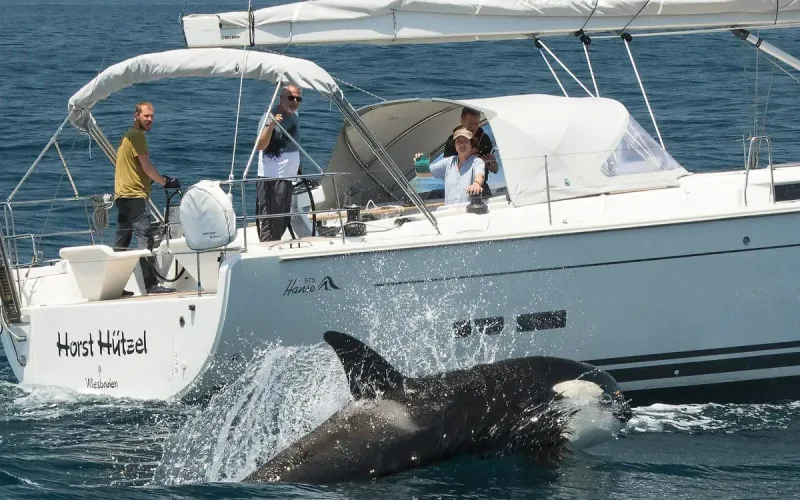
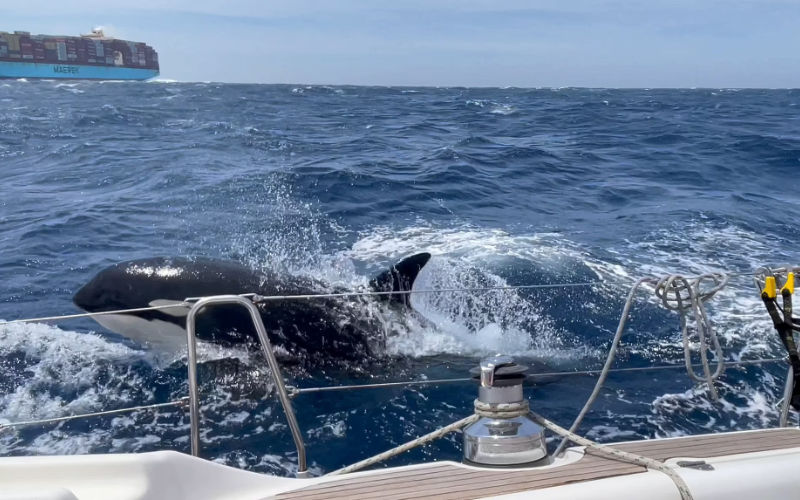
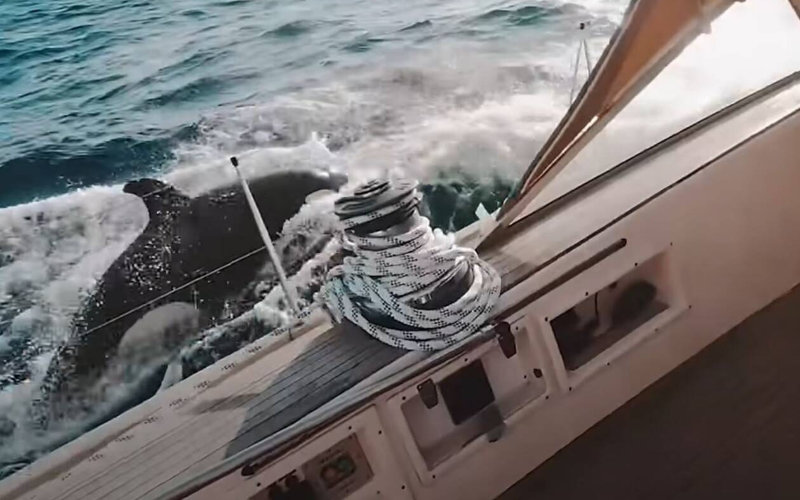
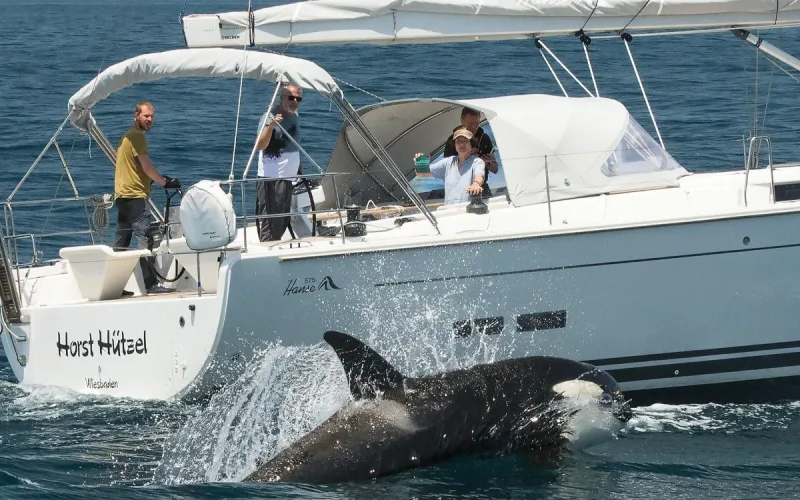
The group in question, composed of about fifteen specimens out of a local population of around forty individuals, is no stranger to encounters with boats. Since 2020, nearly 700 interactions have been recorded, sometimes causing significant damage such as broken rudders or even shipwrecks, like the one that occurred off the coast of Portugal in September 2025. Despite the spectacular nature of these incidents, experts say these are not deliberate attacks. There is no evidence that these animals consider humans as potential prey.
Scientists now favor the hypothesis of playful behavior that has snowballed within the community. The orcas would be attracted to the rudders of sailboats because these moving parts offer stimulating resistance and vibrations when manipulated. After damaging a structure, the cetaceans have been observed playing with the debris before resuming their journey, indicating that they perceive the vessels as mere sources of entertainment, without being aware of the risks to the crews.