Sardines Move Away as Fuel Prices Soar: Moroccan Fishers Face a Double Trap
Sardines are reportedly moving toward cooler waters farther from Morocco’s usual fishing grounds. This is a problem for fishers, who are forced to travel greater distances as fuel prices rise sharply.
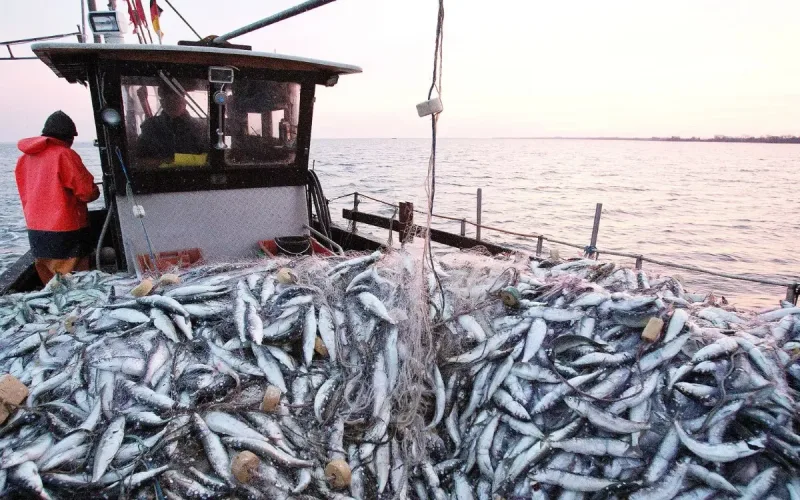
The phenomenon is described by Rashid Sumaila, a professor at the University of British Columbia and a specialist in fisheries economics, interviewed by Fortune.
Highly sensitive to water temperature, sardines follow favorable areas as the ocean warms. According to the researcher, this development is also affecting Morocco: fishers must then go farther to find the schools, with longer trips and catches that have become less predictable.
This pressure comes as Moroccan sardine landings have already collapsed. They fell from approximately 965,000 tonnes in 2022 to 525,000 tonnes in 2024, a decline of nearly 46%.
Morocco has already taken several measures in response to the scarcity of sardines, including the suspension of frozen sardine exports in order to prioritize supplies for the domestic market.
On Bladi.net : Morocco fishing crisis: stocks collapse, exports at risk
Climate change does not, however, explain this decline on its own. Rashid Sumaila also cites overfishing, pollution and other pressures exerted on marine ecosystems.
A scientific study published in July 2026 on Moroccan stocks also reaches a worrying conclusion. The researchers note particularly significant overexploitation in the southern area of the Moroccan Atlantic, where the studied biomass remains well below the level required to achieve a sustainable yield.
Greater distances as fuel prices rise
For Moroccan fishers, the movement of the resource now poses an additional problem: the cost of going to find it.
Fortune points out that tensions caused by the war in Iran and disruptions in the Strait of Hormuz have led to a sharp rise in oil prices. Vessels may therefore have to travel more nautical miles precisely when every trip is becoming more expensive.
This is what Rashid Sumaila describes as a double shock: fewer fish accessible nearby and more fuel needed to reach them.
This combination can directly weigh on the profitability of trips at sea. The farther the boats travel, the more fuel they consume, the longer they keep their crews mobilized, and the greater the risk of returning with an insufficient cargo.
The scarcity of Moroccan sardines is already beginning to disrupt European canneries. Spain has also been trying for several months to obtain a relaxation of Morocco’s restrictions on frozen fish exports.
On Bladi.net : Moroccan Sardines Spain Export Suspension Negotiations
The situation is all the more sensitive because Morocco occupies a major position in the global sardine trade. The decline in its catches therefore simultaneously affects fishers, Moroccan canneries, the domestic market and foreign industries dependent on this raw material.
For Moroccan professionals, the equation is thus becoming even more complicated: sardines are becoming harder to find while the cost of going to find them is rising.