The "rentier capitalism" in Morocco denounced
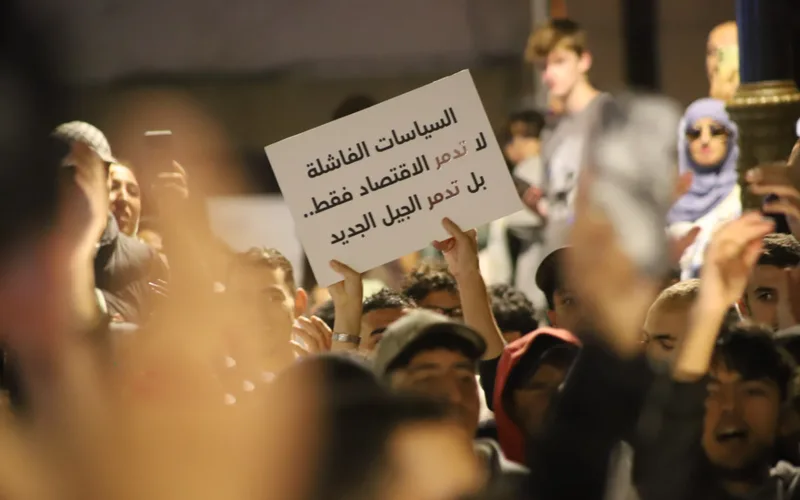
For the Moroccan economist Najib Akesbi, the anger of Generation Z finds its roots in a deeply unequal economic system. For sixty years, the kingdom has built a "rentier economy" that enriches a few privileged individuals at the expense of the majority. In this interview with Le Monde, the development policy specialist analyzes without mincing words the flaws of a model that crushes the working and middle classes.
Since the 1960s, Morocco has made strategic choices that still shape the Moroccan economy today. "We first made the choice of a market economy. The premise was: ’It is the private sector, not the state, that creates companies, jobs and income to be distributed’," explains Najib Akesbi. Then, the second major choice was integration into the global economy, with the idea that tourism and foreign investment would boost growth. But the result is far from the expectations: "Instead of a market economy, we have built a rentier economy," observes the economist.
For the author of the book "Morocco: An Economy Under a Glass Ceiling" (Revue marocaine des sciences politiques et sociales, September 2022), the kingdom has equipped itself with a development system that he describes as "rentier capitalism" and "cronyism." Two-thirds of investment in Morocco comes from the state and public enterprises, while the private sector generates only 25%. "We wanted to create a class of entrepreneurs, we have manufactured a class of rentiers," Akesbi specifies, adding that "in the hydrocarbon sector, there are two or three companies that control the market. They impose prices higher than the normal price. These 2 to 3 dirhams are not profit but a rent, collected outside the logic of the market. We are in the capitalism of cronyism," he denounces.
Integration into globalization has also not kept its promises. The trade balance has remained in deficit since 1974, with an import coverage rate of exports of only 60% in 2024. "We have a trade deficit with all the countries with which we have signed free trade agreements. This is questionable," the economist points out. For him, this strategy based on the low cost of labor widens inequalities: "When you want to attract foreign investors on the basis of the comparative advantage of labor costs, you are in a logic of pressure on low wages and widening of inequalities."
Najib Akesbi also questions the gap between King Mohammed VI’s speeches and the reality on the ground. "After twenty-six years of reign, we barely grasp this gap," he says. The economist also cites the 2005 fiftieth anniversary report, where all the current problems had been identified. "The report was written, it was put away, we moved on to something else." For the expert, the current system "crushes the poor and marginalized, and even the middle class," and cannot be corrected by a few social measures. "When inequalities take the elevator, social crumbs are content with the stairs. We are still there in 2025," he says.
Furthermore, inflation and tax reforms have favored large companies to the detriment of small ones. "We have reduced the tax burden on large companies and increased the burden on small and medium-sized enterprises," laments the tax policy specialist. As for the informal sector, far from being an anomaly, it is, according to him, the direct product of the formal system. "The production system needs an informal sector. Because that’s where you can draw the means to reduce the production costs of the formal sector, and thus maximize its profits," he said. With only 40,000 to 50,000 jobs created per year compared to three to four times as many young people entering the labor market, the informal sector becomes a "refuge sector" for those rejected by the formal economy, Akesbi concluded.