Rarely Seen in France: Moroccan Wedding Treasures Go on Show in Paris
Gold-embroidered caftans, antique jewelry and ceremonial headdresses rarely shown to the French public. In Paris, the Arab World Institute is celebrating Moroccan wedding traditions in an exhibition bringing together historic pieces and works by contemporary artists.
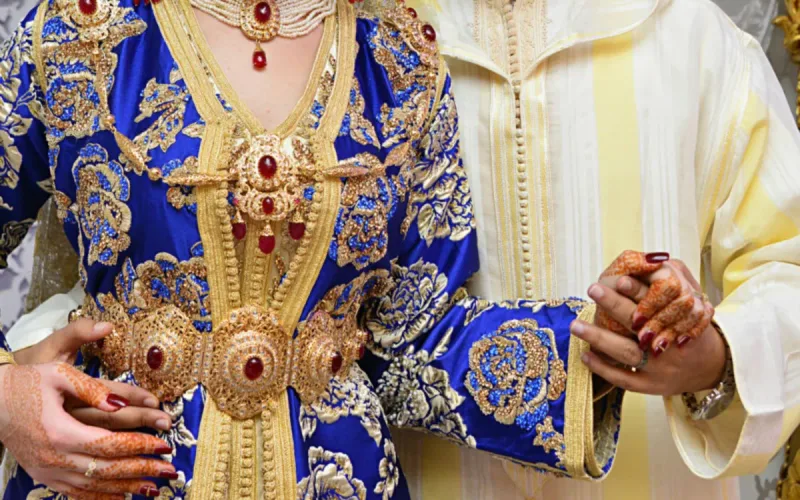
A purple velvet caftan trimmed with gold braid, a brocade belt from Fès, pearls and a silk scarf. The outfit, once worn by brides in Rabat, has passed down through generations before joining the collections of the National Museum of Adornment at the Oudayas. It is now one of the pieces on display in Paris in the exhibition “Long Live the Bride!”, which opened on September 29 at the Arab World Institute.
The collection, dating from the 19th and 20th centuries, includes a headdress called a touqida, worn on the sixth day of the wedding celebrations, known as youm el-hzam. It is one of many traditions that the French public can discover through around 40 costumes and adornments from Morocco. According to the Arab World Institute, these pieces had never before been exhibited in France.
The exhibition is complemented by historic photographs. In a photograph taken between 1934 and 1939 by Jean Besançenot, a bride from Béni Mellal, in the Middle Atlas, appears in her traditional attire. From one region to another, clothing varies, as do the jewelry and gestures that accompany the ceremony. The exhibition also focuses on the women who work behind the scenes: those who prepare the trousseau, embroider the fabrics and dress the bride-to-be.
When wedding traditions inspire artists
But weddings are not told solely through the clothing of the past. The organizers have also invited 27 contemporary artists from the Maghreb and its diasporas, mostly women, to share their perspectives on marriage. They include Moroccan artists Ymane Fakhir, Sara Ouhaddou and Ghizlane Sahli.
Their works are displayed alongside the historic costumes and explore both the passing down of traditions and the expectations placed on future spouses. Music, dance, meals and rituals also feature in the exhibition, which shows how some customs are maintained or evolve, particularly in families living in France.
On Bladi.net : She turns Morocco’s Amazigh symbols into museum pieces in the Netherlands
The exhibition is accompanied by a program of events from October 8 to 11. Moroccan writer Fouad Laroui will take part in an event on Saturday, October 10, about “30 Days to Find a Husband.” Discussions on choosing a spouse, screenings and performances are also included in the Arab World Institute’s program.
“Long Live the Bride!” runs through February 28, 2027. Tickets cost 12 euros at the full price, 10 euros at the reduced rate and 6 euros for those aged 12-26. Admission is free for children under 12.