
Origins of Humans: Morocco Unveils the Potential Common Ancestor of Sapiens and Neanderthal
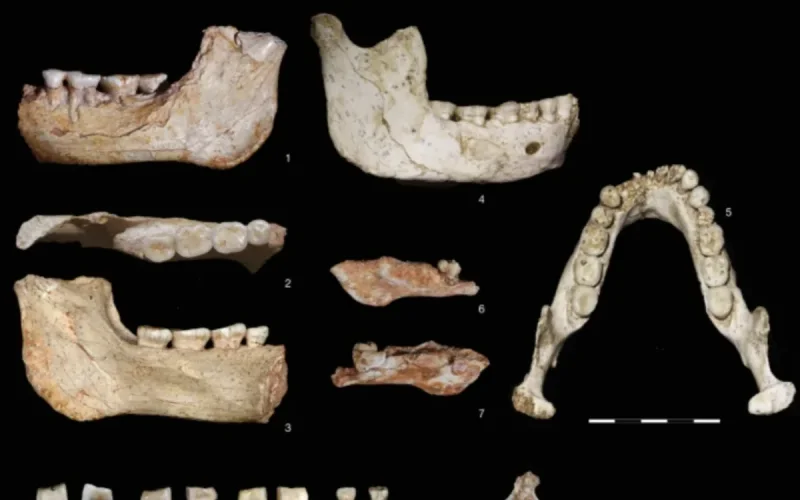
A missing piece of the puzzle of human evolution has just been found in Morocco. A team of researchers has discovered hominid fossils dating back about 773,000 years in a quarry in Casablanca. Published this Wednesday in the journal Nature, this finding provides crucial clues about the common ancestor of modern humans, Neanderthals, and Denisovans.
Morocco confirms its status as a key land for paleoanthropology. These new fossils document a little-known period of African populations, long before the famous Homo sapiens of Jebel Irhoud (300,000 years).
Paleogenetic data had already estimated that the last common ancestor of our species and its extinct cousins (Neanderthal and Denisova) lived between 765,000 and 550,000 years ago. This discovery in Casablanca places these hominids squarely within this critical time window, providing concrete elements where the geographical distribution remained unclear.
A distinct lineage from Homo antecessor
While contemporary fossils, those of Homo antecessor (dated between 950,000 and 770,000 years), had been discovered in Atapuerca, Spain, the Moroccan remains tell a different story.
Although similar in age, the Casablanca fossils are morphologically distinct from their Spanish counterparts. They present a unique combination of primitive and derived traits, evoking both archaic Eurasian hominids and future Homo sapiens. This distinction reinforces the hypothesis of an African origin of our lineage, rather than Eurasian, consolidating the "solid evidence" of a deep continental anchoring of humanity.
Related Articles
-

Fnac Darty entrusts Morocco with part of its marketplaces’ customer service
20 September 2026
-

In Morocco, farmers will henceforth be monitored down to their water pumping
20 September 2026
-

Morocco abandons GMT+1 after eight years: what will change from tonight
20 September 2026
-

An Accident Involving Your Car in Morocco May Prevent You from Leaving the Country
19 September 2026
-

Europe now buys €25.5 billion from Morocco, and agriculture is no longer dominant
19 September 2026