
Morocco World Cup Secret: European-Trained Lions Challenge Netherlands
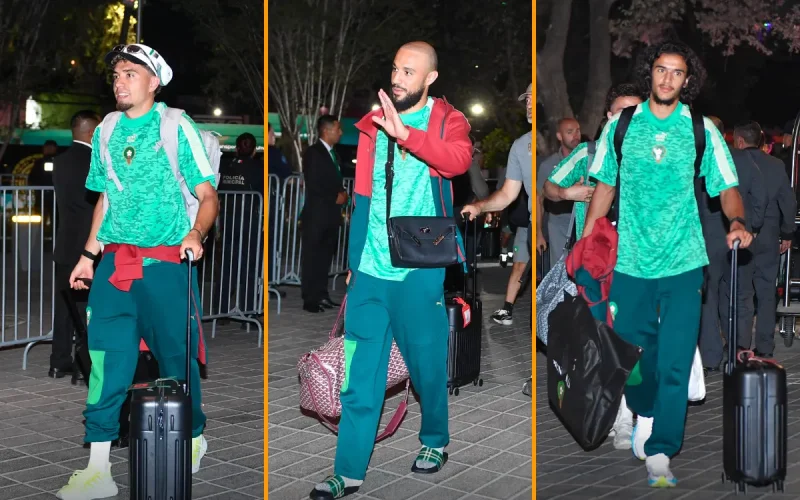
The Atlas Lions face the Netherlands in the Round of 16 of the 2026 World Cup. To break the hegemony of European and South American nations, the squad relies heavily on its dual-national talents trained in the finest academies of the Old Continent.
The Moroccan squad relies largely on its diaspora to compete with the world elite. Of the twenty-six players called up for the competition, nineteen were born abroad, including three on Dutch soil. These athletes benefit from high-level training within European training centers, enjoying financial resources unavailable elsewhere. This advantage will be crucial on Monday during the clash against the Netherlands, where the duel between Achraf Hakimi and Cody Gakpo promises to be decisive, as will the need to block striker Brian Brobbey.
On Bladi.net : Global Football: Morocco Becomes the Center of the World, Europe Sidelined
This strategy is accompanied by a deliberate investment in Moroccan training. While midfielder Azzedine Ounahi is the sole representative of the Mohammed VI Academy in the current squad, this program founded near Rabat is now expanding to four other cities. This structure had moreover provided four players during the Qatar epic, where the team became the first African nation to reach the semi-finals, after being pioneers in advancing past the group stage in 1986.
Historically, the World Cup remains monopolized by Western Europe and South America, masters of industrializing youth development. FIFA president Gianni Infantino may present himself as a defender of the Global South, supported by votes from African, Asian, and Latin American delegations, but sporting reality remains frozen. The established order resists, forcing other federations to adopt the European model to hope to compete.
On Bladi.net : Morocco can win the World Cup": Arsène Wenger sees big
The break with this historical hegemony will therefore be decided on the pitch rather than in governing bodies. If a new world is to emerge, "it will be born on the field through connections with the European system, rather than through Infantino’s machinations," analyzes British newspaper The Guardian. This fusion between diaspora input and national structure gives Morocco serious arguments to upset the hierarchy.
Related Articles
-

From 4 to 7 out of 10: Achraf Hakimi divides the French press after Rennes-PSG
24 August 2026
-

Rejected at medical, this Moroccan finds a club nine days later
23 August 2026
-

At 18, Ayyoub Bouaddi is set to become the most expensive Moroccan player in history
23 August 2026
-

Just Back After 430 Days Out, Chadi Riad Is Carried Off on a Stretcher
23 August 2026
-
Achraf Hakimi gave him confidence: Ali Maamar, the Moroccan rising at Anderlecht
23 August 2026