
Morocco’s Tourist Currency Quota Lags Behind North African Neighbors
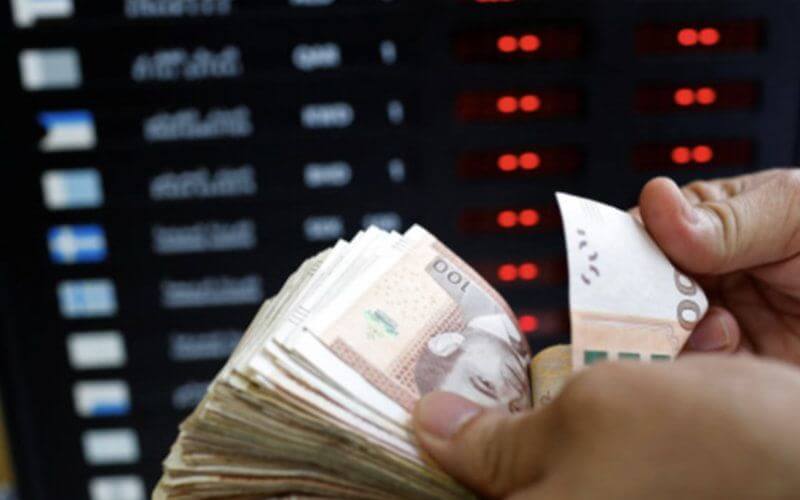
As absurd as it may seem, the foreign exchange quotas that the three Maghreb countries, namely Morocco, Tunisia and Algeria, have imposed on themselves, are not based on any credible criteria.
In these three countries, the "tourist allocation" imposed on any tourist wishing to travel abroad reveals disproportions that nothing can explain. The irony is that, every year, the observed gaps widen without the parties concerned knowing what motivates the increase in these currencies that they are forced to hold on to.
For the case of Morocco, it is necessary to have 40,000 dirhams (nearly 3,700 euros) per calendar year. However, curiously, on January 1st, taking into account inflation and the slight depreciation of the currency, "this amount has been revised upwards", informs a well-informed source at Jeune Afrique. This explains the action taken by the Office des Changes (OC) which now sets the ceiling at 45,000 dirhams, an amount applicable to all: big and small. We can even hope to reach 100,000 dirhams depending on the income tax (IR).
And yet, elsewhere, precisely in Tunisia, it is only necessary to have 6,000 DT (about 1,730 euros) per year, for an adult and 3,000 DT, for a child. This has been the case since 2016, "while the Tunisian Dinar has depreciated sufficiently against the Euro", notes the same source. And to add that at equal allocation, "the Tunisian tourist has seen his purchasing power abroad erode over three years".
On the other hand, in Algeria, 15,000 DA (about 111 euros) are granted per adult and 7,500 DA, per child. In reality, these amounts are very far from guaranteeing the minimum to an Algerian family. "Not even a night in a respectable hotel".
Given the current state of foreign exchange reserves, the authorities do not intend to proceed with an increase in these costs. As a result, this forces the potential traveler to refer to parallel markets to prepare his stay abroad," concludes the same source.
Related Articles
-
220 dirhams on construction sites, up to 400 in the fields: Morocco lacks workers
25 August 2026
-
This Israeli company equips defense giants and also has clients in Morocco
24 August 2026
-
After three days in Algeria, a sanctioned Russian ship passes near Morocco
24 August 2026
-
In Brussels, a Moroccan name and being over 50: the profile most disadvantaged in hiring
24 August 2026
-
Morocco Has a New Billionaire Forbes Has Yet to Spot
24 August 2026