
Morocco exploits Netherlands weaknesses Round of 16 tactics
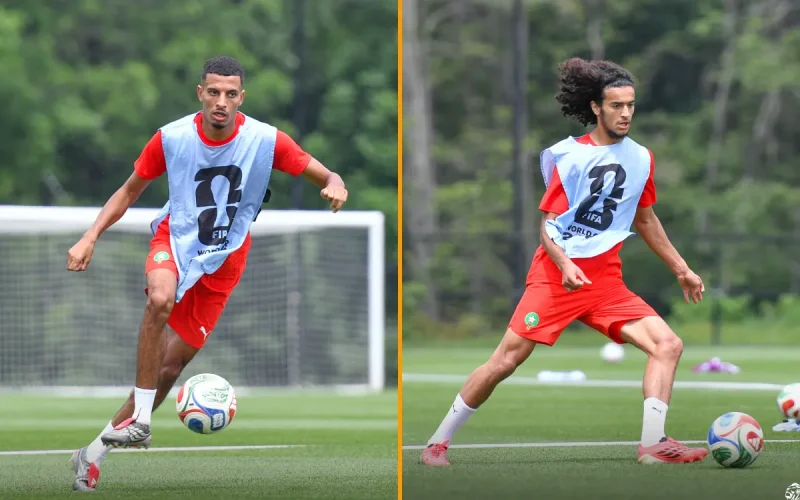
The Netherlands dominated Tunisia (3-1), but their last match also revealed fragile areas. Before the Round of 16 against Morocco, the Atlas Lions know where they can strike: in the spaces left by the fullbacks and in quick transitions.
The Netherlands advance toward their Round of 16 match against Morocco with a controlled victory over Tunisia (3-1). The numbers paint the picture of a dominant team: 647 passes, 20 shots, 7 on target, 27 crosses and 6 corners. But behind this impression of control, several weaknesses appear.
On Bladi.net : Netherlands Morocco: Defenders Pose Aerial Threat
The Oranje attacked heavily, crossed frequently and pushed their defenders forward. An obvious strength, but also a risk. Because the more the Netherlands advance, the more spaces they leave behind them. That is precisely where Morocco can build its plan.
Spaces behind Dumfries
The first weak point is on the Dutch right flank. Denzel Dumfries was one of the most active players against Tunisia. He attempted 4 shots, 2 on target, and delivered 6 crosses. His offensive contribution is enormous, but it also forces the Netherlands to defend with space behind him.
For Morocco, this zone can become a real opportunity. By drawing the Dutch to one side and then quickly moving the ball, the Atlas Lions can seek depth behind Dumfries. This won’t be a match to win through possession, but through execution speed.
Morocco has players capable of attacking these spaces. If ball distribution is clean, the corridor left by Dumfries can become a breakthrough zone. The Netherlands like to establish their dominance in the opponent’s half. Morocco must precisely take advantage of the moment when this dominance destabilizes them.
A team that crosses frequently
The Netherlands produced 27 crosses against Tunisia. This statistic shows their strength, but also a form of dependency. When they don’t find solutions through the middle, the Oranje insist on the flanks, particularly with Dumfries and Reijnders. Their danger becomes more predictable: bring the ball to the wings, cross, then attack the box.
For Morocco, the challenge will be to cut off crosses at the source. It won’t be enough to defend in the box. They must prevent the Dutch from settling too comfortably on the flanks. If the Atlas Lions force the Oranje to go back through the middle, the match can become less comfortable for them.
This dependency on crosses can also create transitions. After a cross is cleared, the Netherlands often find themselves with many players ahead of the ball. Morocco must be ready to break quickly, with a clean first pass, to transform a defensive situation into a dangerous attack.
Efficiency that masks certain limitations
The score against Tunisia is clear, but the Netherlands didn’t produce a volume of chances as huge as the result might suggest. Their expected goals total reaches 1.845 for three goals. This reflects an efficient team, not necessarily an irresistible one.
The Oranje attempted 20 shots, but not all were clear-cut chances. Their offensive power comes mainly from the number of situations created, not solely from the quality of each one. For Morocco, this means accepting to endure certain phases without panicking at every shot.
The most important thing will be to protect the central area and not give second chances. The Netherlands are dangerous when a ball lingers in the box, when a cross is poorly cleared or when an aerial duel is lost. However, if they are forced to multiply shots from tight angles, their dominance can lose effectiveness.
Forwards not all influential
Another point to note: the best Dutch players against Tunisia weren’t the forwards. Jan van Hecke, Virgil van Dijk and Dumfries were the highest-rated players. Brobbey scored, but only touched 7 passes. Depay, who came on, had very little influence.
This data is interesting for Morocco. The Netherlands can be very dangerous, but their offensive play doesn’t necessarily rely on forwards constantly involved in the game. If Morocco cuts off the supply coming from the flanks and midfield, the Dutch forwards can find themselves isolated.
The role of Moroccan midfielders will therefore be decisive. They must prevent Frenkie de Jong and Ryan Gravenberch from playing too easily. If the Netherlands must resort to lateral balls or forced crosses, Morocco will have a better chance of defending the box in good conditions.
Morocco must play the right match
The main mistake would be trying to rival the Netherlands in a possession-based match. The Oranje are capable of stringing passes together, pushing their block forward and wearing down the opponent. Morocco should instead seek a match of patience, discipline and transitions.
The weaknesses exist: spaces behind the fullbacks, loss of balance after crosses, dependency on offensive volume and a defense that still conceded a goal to Tunisia. Verbruggen also had to make 3 saves, proof that the Netherlands can be exposed.
On Bladi.net : Morocco exploits Netherlands defensive weakness World Cup
For the Atlas Lions, the key will be not just to resist. They must defend intelligently, then strike quickly. The Netherlands have powerful weapons, particularly in the air, but their way of attacking also opens doors. Morocco must identify them and exploit them without rushing.
Related Articles
-

Ebnoutalib turns his back on Morocco, Ouahbi responds sharply
17 September 2026
-

Spain wants to avoid another Lamine Yamal case with this Moroccan Barça gem
17 September 2026
-

Sofyan Amrabat refuses to play for Morocco, Ouahbi responds: “The past grants no privileges”
17 September 2026
-

Dutch football mourns Ahmed Ammi, born in Morocco and dead at 45
16 September 2026
-

Hakim Ziyech wants to return to Morocco: “I don’t want to demand a place, I want to earn it”
15 September 2026