Moroccan Mandarin Monopoly: How a Royal Variety Conquered Spain's Citrus Industry
Each Nadorcott mandarin tree planted in Spain earns between 7 and 45 euros for a Moroccan company. With more than two million plants in the Iberian Peninsula, this Moroccan variety now accounts for more than a third of Spain’s mandarin production.
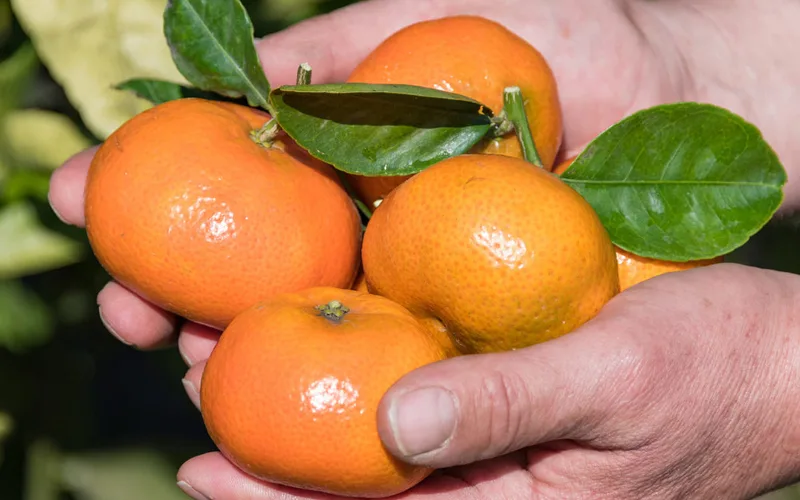
The Nadorcott was born from a Murcott mandarin seed at the National Institute of Agricultural Research (INRA) in Morocco. Its patent belongs to a company linked to the Domaines Agricoles, the holding company that manages the properties of the Moroccan royal family. Arrived in Spain in the late 1990s, this variety first developed in the Valencian Community before being officially registered as a protected plant variety in 2006 by Nadorcott protection SARL, recalls El Debate.
Since then, all Spanish farmers who plant Nadorcott mandarins must pay royalties to Carpa Dorada SL, the owner of the rights in Spain. The first operators paid 7 euros per tree. But today, the average price is around 20 euros per plant, and "the turnover generated by these trees has reached 45 euros per plant in some cases," according to sources.
The Nadorcott is a very productive variety (between 35,000 and 55,000 kilos per hectare compared to 26,000 on average for other mandarin trees). It requires little water, and its balance between sugar and acidity appeals to consumers. In 2024, Spain produced 249,907.69 tons of Nadorcott, or 14.39% of all citrus fruits harvested in the country and 34.16% of the total mandarins. Production is mainly concentrated in the Valencian Community, Tarragona, Murcia and Andalusia. The harvest is marketed from January to April. Portugal also cultivates it, but only in the Beja region, it is specified.
The Nadorcott mandarin license will expire on January 1, 2030. At that date, the Moroccan variety will fall into the public domain and can be planted freely. Until then, the kingdom will continue to collect these royalties, while imposing itself on international competition, particularly South Africa, Peru and Egypt, which also cultivate this variety and compete with Spain on the global citrus market.