Moroccan Diaspora Netherlands: Remittances Decline Across Generations
For a long time, money sent to Morocco was one of the strongest links between Moroccans in the Netherlands and their country of origin. But this relationship is changing across generations, according to a recent study dedicated to the Dutch Moroccan community.
In the study Migrants of Moroccan origin, country of origin and future — Development of belonging and identification — which can be translated as Migrants of Moroccan origin, country of origin and future — Development of sense of belonging and identification — published in The Hague in February 2026, authors Rasit Bal and Dick de Ruijter analyze the evolution of the link between Moroccans in the Netherlands and Morocco and the Netherlands. This qualitative work, also titled Belonging and identification with country of origin, is based notably on in-depth interviews within the Dutch Moroccan community.
On Bladi.net : Morocco: The End of the Traditional Extended Family?
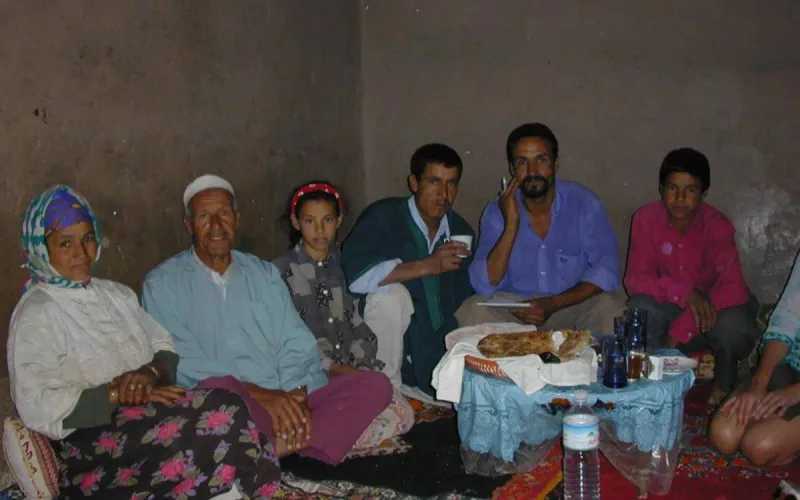
One of the study’s key findings is clear: for the first generation of Moroccan workers who arrived in the Netherlands, the link with Morocco was very concrete. It was maintained through family remaining in the country, letters, visits, land purchases, house construction, and also through money regularly sent to loved ones. The authors recall that many lived modestly in the Netherlands in order to save as much as possible and help their family in Morocco.
But this logic gradually transformed. With family reunification, a significant part of family life shifted to the Netherlands. Wives, children, and then grandchildren built their daily lives in Europe. According to the study by Rasit Bal and Dick de Ruijter, the need to maintain the household established in the Netherlands put pressure on money transfers to family remaining in Morocco. This trend intensified further when children grew up and started their own families.
A link to Morocco less financial, but still very present
This decline in remittances does not mean the link with Morocco disappears. It simply changes in nature. For the first generations, Morocco was often the emotional, family and economic center. For subsequent generations, it remains a country of origin, vacations, family memory and identity, but it no longer always occupies the same place in the household’s financial organization.
On Bladi.net : Out of Sight, Close to the Wallet: How Exile Transforms the Role of Moroccan Expatriates
The study thus shows a broader evolution: the relationship with Morocco becomes less material and less obligatory. It increasingly passes through vacations, weddings, memories, language, religion, cuisine or sense of belonging. Morocco remains present in the lives of many Moroccans in the Netherlands, but money is no longer necessarily the main channel of this link.