Moroccan company receives €38,530, French tax authorities tax IT specialist
An IT specialist who worked in France must pay €19,300 in taxes and penalties on the €38,530 paid to a Moroccan company. She maintains that she neither invoiced nor received these sums. The courts nevertheless consider that they remunerated her own work.
The case dates back to 2017. A French company, Metric, had signed a contract with the Moroccan-law company Satisfactory to have some of its employees work on assignments carried out in France.
Within this framework, the IT specialist was to work from January 2 to October 31, 2017. Her services were performed at the premises of Alteca, the end client, which had entered into technical assistance and subcontracting agreements with Metric.
Each month, Alteca prepared the consultant’s activity reports. The Moroccan company then used these documents to invoice Metric. Over the course of the year, the services performed by the IT specialist resulted in €38,530 being paid to Satisfactory.
An audit of Metric’s accounts led the French tax authorities to examine the consultant’s personal situation. The tax authorities considered that the €38,530 corresponded to professional income taxable in France, even though the payments had been made to the Moroccan company.
On Bladi.net : French tax MRE Morocco bank account declaration requirements
The authorities assessed the IT specialist’s income ex officio under the category of non-commercial profits. They claimed €10,512 in income tax from her, to which €8,788 in penalties were added. The total bill thus came to €19,300 for 2017 alone.
She says she never received the money
The consultant disputed being self-employed. She explained that she had neither negotiated, drafted nor signed any of the contracts organizing her assignment. Nor had she issued the invoices or received the transfers made between the companies.
According to her, her work was entirely governed by the agreements concluded before her arrival between Satisfactory, Metric and Alteca. She therefore believed that she should be considered an employee and, where applicable, taxed under the category of wages and salaries.
The IT specialist also pointed out that around ten Moroccan workers recruited by Satisfactory had been placed in a comparable situation. All of them were allegedly considered by the tax authorities to be self-employed professionals carrying out IT activities in France. She considered it implausible that these employees had simultaneously decided to create an individual and undisclosed business activity.
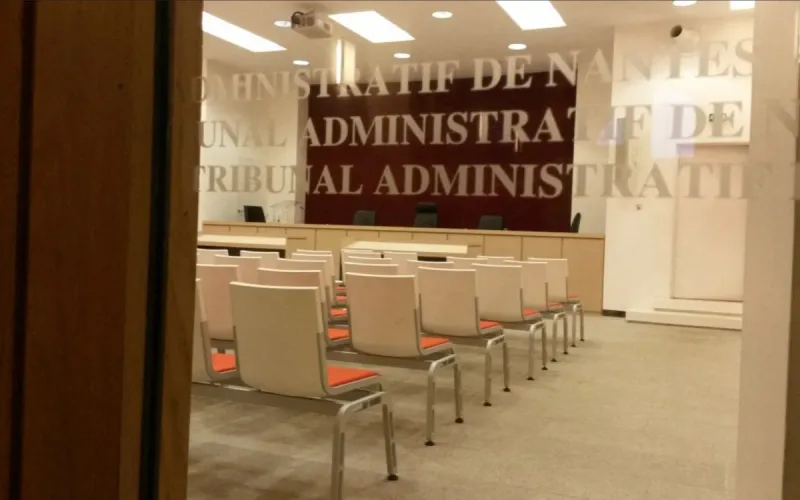
The Nantes Administrative Court of Appeal did not accept this reasoning. In its ruling issued on February 3, 2026, it found that the services had personally been performed in France by the claimant, in her capacity as a Java study engineer.
The Moroccan company had indeed received the money, but the judges identified no independent involvement by Satisfactory corresponding to the amounts invoiced. In other words, the remuneration paid to the foreign company was consideration for the work carried out by the IT specialist herself for the French client.
On Bladi.net : Automatic tax exchange delayed for Morocco
Article 155 A of the French General Tax Code specifically allows France to tax a person who provides services there when the remuneration is paid to an entity established abroad. In this case, the Moroccan company had not demonstrated that it mainly carried out another industrial or commercial activity besides providing services.
The court also held that the IT specialist had not established the existence of a relationship of subordination with Metric or Satisfactory. No evidence showed that these companies gave her instructions or directly supervised her work. Her intellectual activity was therefore classified as professional, individual and independent.
The fact that she had neither issued the invoices nor personally received the transfers was deemed irrelevant. The dispute concerning a €5,375 invoice was also dismissed, as the authorities had produced proof of a €13,370 transfer from Metric to Satisfactory.
Having been dismissed at first instance by the Nantes Administrative Court in March 2025, the IT specialist has therefore also lost on appeal. The €10,512 in tax and €8,788 in penalties remain payable by her.