Mohammed V: The Sultan Who Said "NO" to France
Mohammed V, celebrated as the "father of the nation", led Morocco to independence in 1956. His reign restored the sovereignty of the Kingdom and embarked the country on a profound modernization after years of forced exile.
In 1927, upon the death of Sultan Moulay Youssef, the French authorities brought to power his third son, Mohammed Ben Youssef, then 18 years old. Initially perceived as a docile prince by the colonial power, the young sultan accommodated the protectorate until World War II. During this period, he marked his independence by refusing to apply the anti-Semitic laws of Vichy, thus protecting Moroccan Jewish citizens.
From 1943, his nationalist aspirations were reinforced by President Roosevelt. The decisive turning point came during the Tangier speech in 1947, where he displayed his commitment to sovereignty. Faced with the rise of independence-related violence in Casablanca and Oujda, France decided to remove him. On August 20, 1953, the eve of Eid al-Adha, the sultan was kidnapped from his palace and sent into exile, first in Corsica and then in Madagascar. From the forced exile in Madagascar to the triumphant return of the father of independence
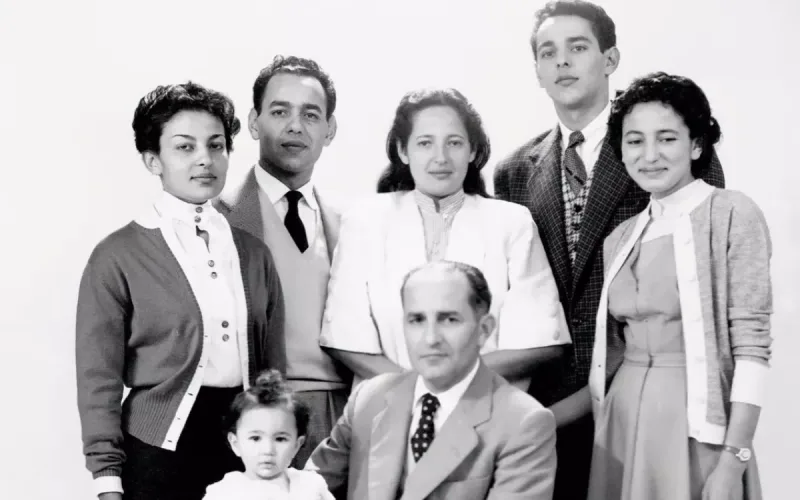
During this period, Paris Match described the sovereign as "the invisible man" residing at the Hôtel des Thermes in Antsirabé. Surrounded by his family, including the future King Hassan II and the little Princess Lalla Amina born in exile, he refused to abdicate despite the pressure. Meanwhile, in Morocco, the rumor of his return triggered massive demonstrations in the medinas, particularly in Fez and Casablanca.
Cornered by the outbreak of the Algerian conflict, France chose negotiation. On November 6, 1955, the agreements of La Celle-Saint-Cloud recognized the independence of Morocco. Ten days later, Mohammed Ben Youssef returned to the country amidst the acclamations of two million people. Independence was officially enacted on March 2, 1956, marking the end of foreign tutelage over the Sherifian Empire.
In 1957, he restored the monarchy and took the title of King Mohammed V, becoming the cement of the new Moroccan nation. A proponent of non-alignment, he embarked on extensive reforms to modernize the country. His sudden death on February 26, 1961, at the age of 51 during a surgical intervention, plunged the people into stupefaction, before his son Hassan II succeeded him on the throne.