Marsa Maroc Set to Take 45% Stake in Barcelona Port Terminal Operator
Boluda Maritime Terminals has won a 16-year contract to operate a terminal at the port of Barcelona. The company, in which Marsa Maroc plans to acquire a 45% stake, has pledged €39 million in investment and is counting on its Moroccan partner to develop fresh-produce traffic.
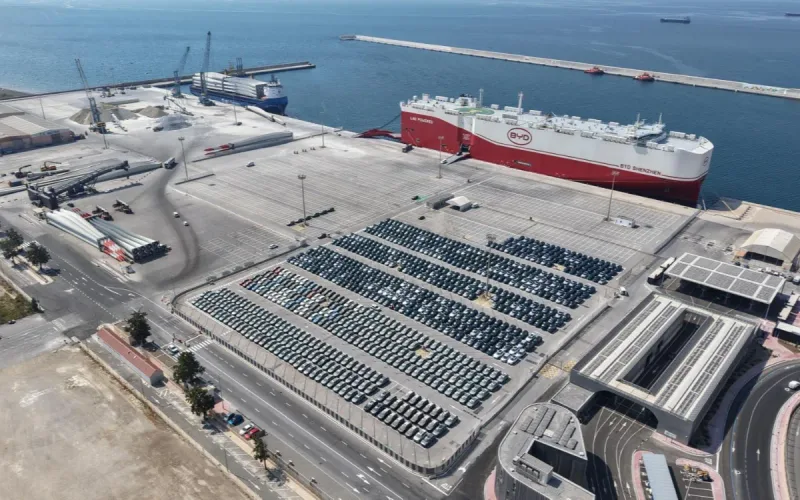
The board of directors of the Port of Barcelona awarded the multipurpose terminal at the Príncep d’Espanya wharf to Boluda on September 30. Its bid received the highest overall score, ahead of those submitted by Sammer, the outgoing operator, and Andino.
On Bladi.net : A Moroccan operator targets nine Spanish terminals, as Madrid hesitates after nine months
The concession covers 87,425 m² and 531 metres of wharf. Boluda has pledged to reach a minimum maritime traffic volume of 1.3 million tonnes a year between 2028 and 2032. The terminal will mainly handle non-containerized general cargo, with the option of also processing containers carried on mixed vessels.
Marsa Maroc has a prominent role in the bid. According to El Canal, the Moroccan operator is linked to refrigerated fruit and vegetable traffic, for which Boluda is planning a corridor connecting Barcelona, Morocco and Brazil.
The 45% stake acquisition is yet to be finalized
The commercial project accompanies the agreement signed in December 2025: Marsa Maroc International Logistics is to acquire 45% of Boluda Maritime Terminals for €80 million. Boluda will retain a majority stake and control of the company.
The acquisition remains subject to Spanish regulatory approval. Sammer had challenged the bid, noting that some of the promised traffic depended on the still-pending deal. The port rejected objections from Sammer and Andino and selected Boluda’s proposal.
On Bladi.net : Spain loses control: Morocco dominates Gibraltar Strait strategy
Barcelona will thus expand BMT’s Spanish network, which already operates in nine ports on the peninsula and in the Canary Islands. The €39 million in announced investment is intended to develop a general cargo platform, integrated with the group’s maritime, road and rail connections.