
Limited to 80 km/h, Moroccan heavy trucks demand the right to accelerate
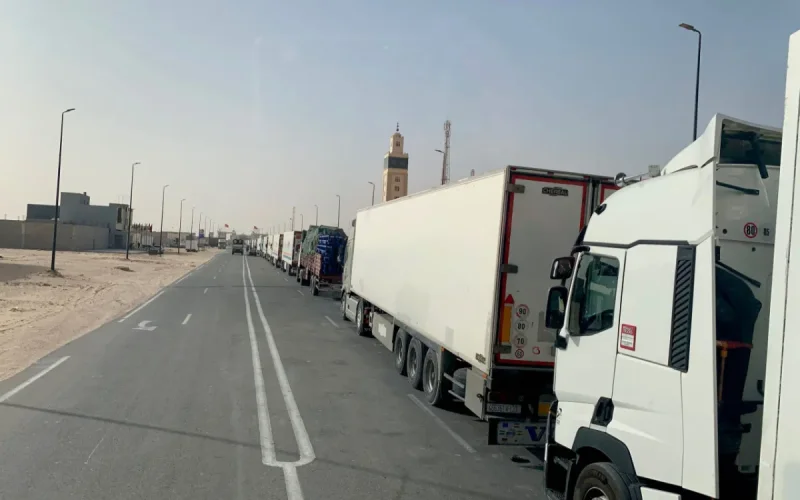
Moroccan road hauliers are calling for a revision of the speed limits imposed on 40-tonne heavy trucks. They consider the current rules outdated in light of advances in truck technology and are asking Morocco to move closer to the standards applied in Europe.
The request comes from the Union of National Transport and Logistics Associations and the General Union of Transport Professionals. In a statement reported by Hespress, industry professionals specifically denounce the failure to raise the speed limit for 40-tonne trucks.
Moroccan regulations currently set a maximum speed of 70 km/h outside built-up areas on ordinary roads and 80 km/h on motorways for goods vehicles exceeding 19 tonnes. These limits are set out in Decree No. 2.10.420 on traffic regulations.
For hauliers, these rules no longer correspond to the capabilities of modern vehicles. They point out that heavy trucks now have ABS systems, engine brakes and safety equipment that are far more advanced than those of previous generations.
The president of the Union of National Transport and Logistics Associations believes that the closer economic relationship between Morocco and the European Union should also result in the gradual harmonisation of the rules applicable to road transport.
According to him, keeping trucks at excessively low speeds can also affect their fuel consumption and emissions, since modern engines are designed to operate within different engine-speed ranges from those of older heavy trucks.
In Europe, trucks are technically limited to 90 km/h
Professionals use Europe as a reference, but the comparison requires some nuance. European regulations require goods vehicles in categories N2 and N3 to have a speed limiter preventing them from exceeding 90 km/h.
In Morocco, a truck weighing more than 19 tonnes therefore remains limited to 80 km/h even on motorways. This is the gap that professionals particularly want to reduce in order, in their view, to improve the competitiveness of Moroccan companies carrying out international transport.
The issue goes beyond speed alone. The organisations are also calling for stronger action against overloading, more inspections, measures against unauthorised transport and the creation of rest areas meeting better standards.
Drivers’ working conditions are a recurring problem. At Tanger Med, truckers had already denounced the lack of space, parking difficulties and waiting conditions.
On Bladi.net : Morocco helps transport operators with fuel… then the tax authorities come after them
The industry also believes that companies strictly complying with the rules may be penalised compared with those that circumvent speed limits, loading rules or the conditions governing transport operations.
Moroccan road transport also remains highly exposed to fuel costs, despite the aid introduced by the State, which explains why professionals are also highlighting truck consumption in their call for a revision of speed limits.
Hauliers are now asking the authorities to open the issue for discussion. Their objective is not merely to drive faster: they are calling for a broader modernisation of Moroccan road-transport rules to bring them closer to European standards, while strengthening checks on overloading and safety.
Related Articles
-

The 2026 World Cup boosts Morocco’s beer market
1 September 2026
-

Electricity consumption is increasing five times faster than production in Morocco
1 September 2026
-
Dakhla, Nador, Tangier, Casablanca: SGTM amasses 35 billion dirhams in construction projects
1 September 2026
-

ONCF debt nears 49 billion dirhams after jumping by 3 billion in six months
1 September 2026
-

Morocco now spends more on auto parts than on imported cars
1 September 2026