
He Promised a €20,000 Dowry in His Moroccan Marriage Certificate, Then Claimed It Was Merely a Formality
A man contested the €20,000 dowry recorded in his Moroccan marriage certificate, claiming that the amount was merely symbolic. The The Hague Court of Appeal nevertheless ordered him to pay the full amount.
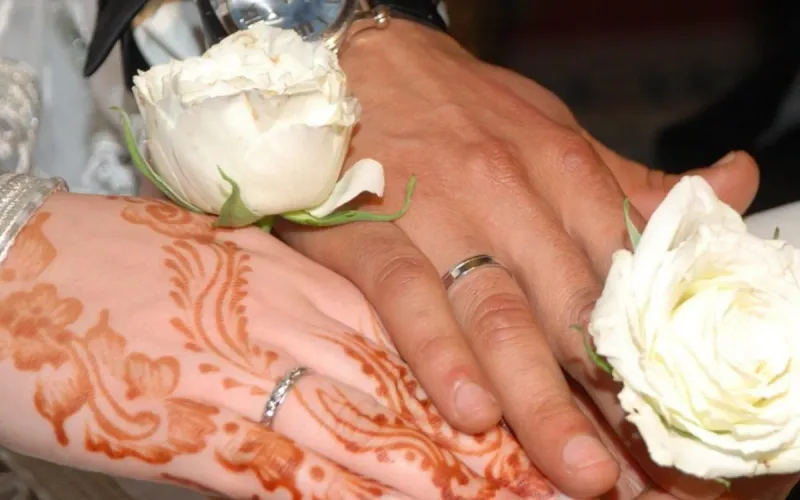
The couple married in the Netherlands in 2011. The following year, they had their union confirmed by the notarial section of the Consulate General of the Kingdom of Morocco in Rotterdam. The validity of this document under Moroccan law was not disputed. This visit to the consulate formed part of the specific marriage and civil-status procedures for MREs.
The certified translation of the document stated that the husband was to pay his wife a dowry of €20,000 and that the entire amount remained owed.
On Bladi.net : Divorce of two MREs: where did the €1.4 million go?
The Dutch courts pronounced their divorce in June 2022. The decision was entered in the civil registry in February 2023. During the appeal proceedings, the wife claimed payment of the €20,000 for the first time.
Her former husband opposed the claim. He explained that mentioning a dowry was more or less necessary for the celebration of the Islamic marriage, but that the spouses had never intended to create a legally enforceable debt. He also argued that the document did not clearly specify when the amount had to be paid.
The dowry constitutes a genuine claim
In its decision of 6 March 2024, the The Hague Court of Appeal first declared the claim admissible. Although it was presented for the first time on appeal, it remained sufficiently connected to the divorce, and examining it did not cause any unnecessary delay in the proceedings.
On the merits, the judges rejected the argument that it was merely a formality. The certified translation specified that the husband would pay €20,000 to his wife and that the entire amount remained his responsibility. The man provided no sufficient evidence to demonstrate that the dowry had only symbolic significance.
The court specified that the dowry provided for under Moroccan law is based on a particular legal relationship, known as “sui generis.” It therefore does not constitute a clause of the matrimonial property regime. Its payment, any applicable limitation period and the other questions related to its enforcement are governed by Moroccan law, explains the decision of the The Hague Court of Appeal.
The application of Moroccan law to the dowry does not, however, mean that the judgment had to be enforced in Morocco. This is a separate issue from the procedure allowing a decision issued abroad to be recognized in Morocco.
On Bladi.net : Real estate in Morocco hidden during a divorce: Dutch justice takes it away from its owner
Since it was undisputed that the amount had never been paid, the court recognized the existence of a €20,000 claim in favor of the former wife. It ordered the man to pay this amount within twelve weeks of the decision.
In this case, the statement recorded in 2012 before the notarial service of the Moroccan consulate was therefore neither decorative nor symbolic: it represented a legally enforceable debt.