
French banks leave Africa as Moroccan groups move in
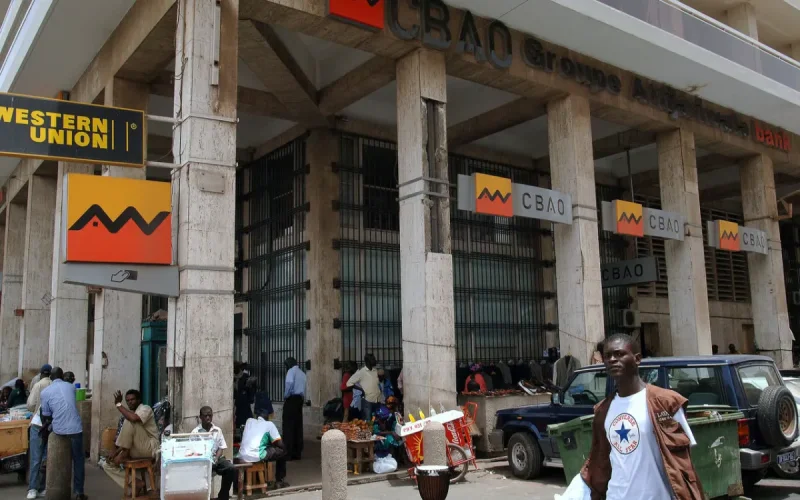
The three major Moroccan banking groups now have such an extensive presence across the continent that Morocco is being described as Africa’s second-largest regional banking power, behind South Africa. Attijariwafa bank, BCP and Bank of Africa are generating an increasing share of their business outside the Kingdom.
Moroccan banks have changed scale. Long concentrated on their domestic market, Attijariwafa bank, Banque Centrale Populaire (BCP) and Bank of Africa (BOA) now have networks covering a large part of the continent.
In an analysis published on September 2, African Business said that this expansion now makes Morocco Africa’s “second-largest regional banking power,” behind South Africa.
The assessment is based in particular on the weight of the African operations of the three main Moroccan groups. Attijariwafa bank now operates in at least 15 other African markets, BCP in 18 and Bank of Africa in 20.
This presence is particularly strong in West Africa, where Moroccan banks have gradually reclaimed some of the ground abandoned by major European institutions. The trend was already visible when French banks began withdrawing massively from Africa.
On Bladi.net : The Illusion of French Banks’ Return Against Morocco’s Steamroller
Activities outside Morocco now account for a considerable share of the three groups’ business. According to African Business, they represent around 25% at Attijariwafa bank, 25% at BCP and up to 40% at Bank of Africa in terms of revenue and assets.
BOA is therefore the Moroccan group that has taken its internationalization furthest. It is no longer limited to West and Central Africa and also has a significant presence in East Africa.
Moroccan banks benefit from Europe’s withdrawal
This progress has taken place alongside the retreat of several major European banking groups from the continent.
BNP Paribas is notably leaving BMCI’s share capital in Morocco after already withdrawing from several West and Central African markets. Société Générale has also sold numerous African subsidiaries in recent years.
Moroccan groups have followed the opposite path. After beginning their continental development with retail banking, they are now expanding into corporate finance, international trade, investment banking and cross-border payments.
This strategy could benefit further from the growing strength of the African Continental Free Trade Area (AfCFTA), which is expected to increase trade between African countries and therefore the need for trade finance, foreign currencies and payment systems between states.
African growth is also taking place as banks continue to strengthen their position in Morocco.
The total outstanding amount of loans distributed by Moroccan institutions reached 1,192 billion dirhams in 2025, an increase of 6.5% in one year.
Loans granted on the domestic market rose by around 8%, their strongest increase since 2011. Financing for equipment even jumped by 25%, driven in particular by numerous investments in industry, transport, renewable energy and infrastructure.
This strong activity is already reflected in the results. Moroccan banks earned 19.2 billion dirhams in 2025, up 22.2% year on year.
On Bladi.net : Morocco Banks Profits Surge 22% - Lending Accelerates 2025
The 2030 World Cup should also provide new opportunities for Moroccan institutions. The construction and renovation of stadiums, railways, airports and hotels will require substantial financing over the coming years.
Alongside this international expansion, banks are also accelerating their digital transformation. African Business notably cites BCP and its Chaabi Pay ecosystem, which had 13.8 million registered users at the end of 2024, compared with 10.3 million a year earlier.
The banking rate is also continuing to rise. Around 56% of Moroccan adults had a bank account in 2025, compared with only 42% to 44% five years earlier.
The domestic market is therefore still far from saturated, while the major Moroccan groups continue their conquest of the continent. It is this combination of domestic strength and pan-African presence that now allows Morocco to be presented as Africa’s second-largest regional banking power, just behind South Africa.
Related Articles
-

Thrown from his motorcycle and then beaten: Moroccan man attacked by six men in Italy
3 September 2026
-
As Morocco rises in the Sahel, Algeria now brings its fighter jets beyond its borders
3 September 2026
-
280,000 tonnes in three weeks: Bangladesh rushes to buy Moroccan fertilizers
3 September 2026
-

A Moroccan Woman Flees Her Brother with Her Three Children, but the Netherlands Sends Her Back to Spain
2 September 2026
-

Their Sentence Is Over, but Algeria Still Holds Moroccan Nationals
2 September 2026