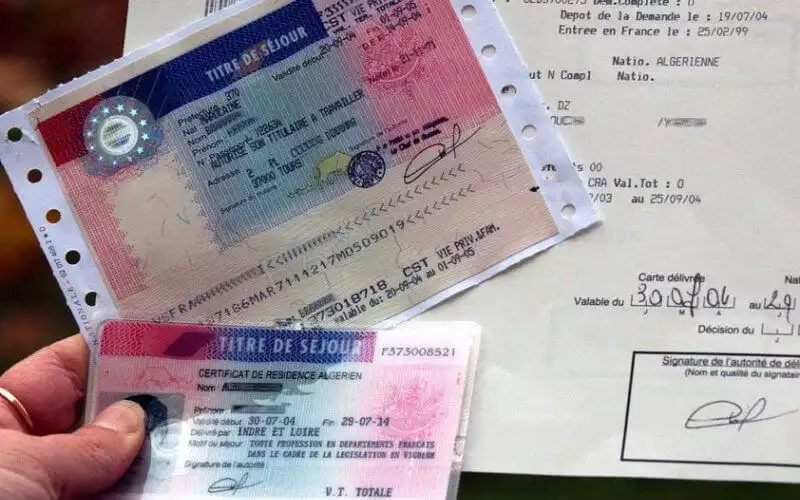
France Cuts Residence Permit Decision Deadline to 90 Days, but Silence Still Means Rejection
A complete application, a decision within three months and, if the authorities remain silent, an implied refusal: the decree published on Thursday changes the timeline for prefectures. It also introduces new protections for some foreign workers who lose their jobs.

From Friday 30 October 2026, French prefectures will in principle have 90 days, down from four months, to decide on the covered residence permit applications. The decision must be notified to the applicant in writing.
This change is set out in Decree No. 2026-1001 of 26 October, published on Thursday in the Official Journal. The deadline starts running as soon as a complete application is filed. If an application is particularly complex, the prefecture may have an additional 30 days, provided it informs the applicant.
If the administration remains silent for 90 days, this still amounts to an implied refusal. The new deadline therefore governs the prefecture’s response, not the physical issuance of the residence permit.
On Bladi.net : His receipt expires, Moroccan man loses his salary despite having a permanent contract worth 3700 euros
Some categories retain their own deadlines. An application for an EU Blue Card submitted by someone who already holds one in another European Union country must, in particular, receive a response within 30 days. For the “talent-chercheur” card, the deadline for an implied refusal remains 60 days.
New protections in the event of job loss
The decree also changes the rules applicable to foreign workers. At the first renewal of a work permit, the period after hiring during which a contract termination can justify a refusal is reduced from twelve months to six. Exceptions apply in cases of involuntary job loss and serious misconduct by the employer.
Work permit procedures still apply when an employee changes employers. Their importance was highlighted in a case involving a Moroccan woman whose residence permit application was rejected because her employer had not taken the required steps.
Another change concerns holders of a “temporary worker” residence permit: if they involuntarily lose their job, their permit cannot be withdrawn for that reason alone for a cumulative period of three months. If they find another employer during that period, they may remain in France while their new work permit application is being processed.
This protection is extended by a further three months when the employee has suffered certain serious forms of exploitation, including working conditions that violate human dignity.
For Moroccan workers, the rules on employee residence permits must also be read alongside the 1987 Franco-Moroccan agreement, which sets out specific provisions. The decree of 26 October does not amend the agreement.
On Bladi.net : France Regularizes Workers in Shortage Occupations, but a Franco-Moroccan Agreement Closes the Door
Holders of a “talent-EU Blue Card” also benefit from new mobility rules. The required period of prior residence in another European Union member state before moving to France for work for the first time is reduced from 18 to 12 months. It is set at six months from the second move.