
Eid al-Adha Morocco livestock prices inflation crisis
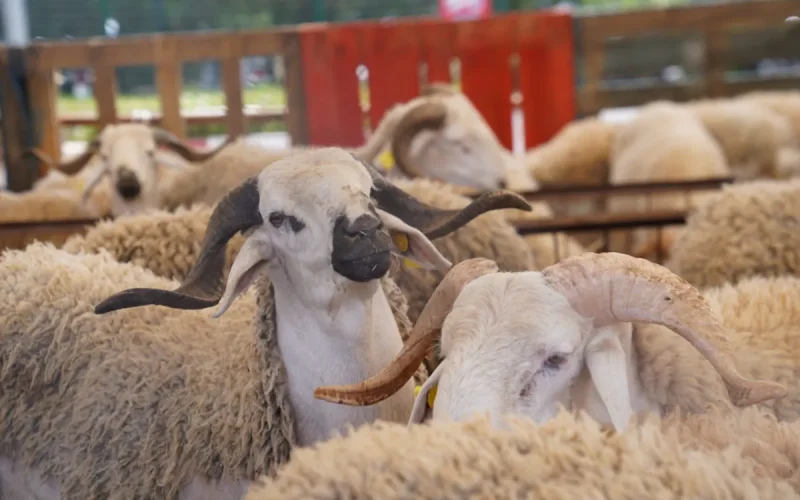
Two weeks before Eid al-Adha, attendance at Moroccan livestock markets remains abnormally low. Hit by inflation, families are hesitant to buy their sheep, raising growing concerns among breeders facing this plummeting demand.
In the weekly souks of northern and central Morocco, weekend sales failed to meet expected targets. Despite abundant supply on site, breeders are witnessing a sharp decline in demand, directly influenced by debates over rising living costs and boycott calls circulating on social media. At the Ouled Hmid market, near Ksar El Kébir, wait-and-see attitudes prevail. Many citizens now prefer to postpone their purchases to the very last days, secretly hoping for better offers or a possible price drop.
On Bladi.net : Eid al-Adha Morocco: Sheep Prices Soar, Families Struggle
This great caution is explained by difficult economic conditions for many households, forced to review their consumption habits. Buyers examine animals at length without finalizing the transaction, burned by prices deemed excessive. Since supply often consists of lean animals fed on pasture, the citizen "no longer seeks simply to buy a sheep, but also wants to obtain quality at a fair price," observes breeder Mohamed El Akhal. Yet, in top-tier markets, the kilogram is negotiated between 78 and 83 dirhams. A 60-kilogram animal can thus reach 4,800 dirhams, representing considerable financial effort.
Facing this increase described as "undeniable," industry professionals point to serious dysfunctions. Questioned by Hespress, Hicham El Jaoubari, regional representative of wholesale meat merchants in Casablanca-Settat, believes this crisis stems directly from the freeze on imports and laxity concerning female slaughter.
On Bladi.net : Morocco: Meat Out of Reach
While Casablanca’s only slaughterhouses sacrifice 1,400 heads per day, he judges that the government should have opened non-subsidized imports. A measure that would have ensured sufficient supply at reasonable prices, while preserving the country’s food security.
Related Articles
-

Six stations for 480 million dirhams: the LGV project transforms the Kénitra–Casablanca corridor
17 September 2026
-

“ We do not agree 100% with Israel”: Bourita explains why Morocco maintains its relations
17 September 2026
-

This Rabat neighborhood becomes the second coolest in the world, ahead of Los Angeles and Tokyo
17 September 2026
-
Russia, Iran, Belarus: Hapag-Lloyd imposes a new clause on all its cargo passing through Morocco
17 September 2026
-

Five days to deliver to Morocco a military cable capable of withstanding nearly 1,100 °C
17 September 2026