
He claimed 45 264 euros from Banque Populaire: the court finds that he owed it 38 845 euros
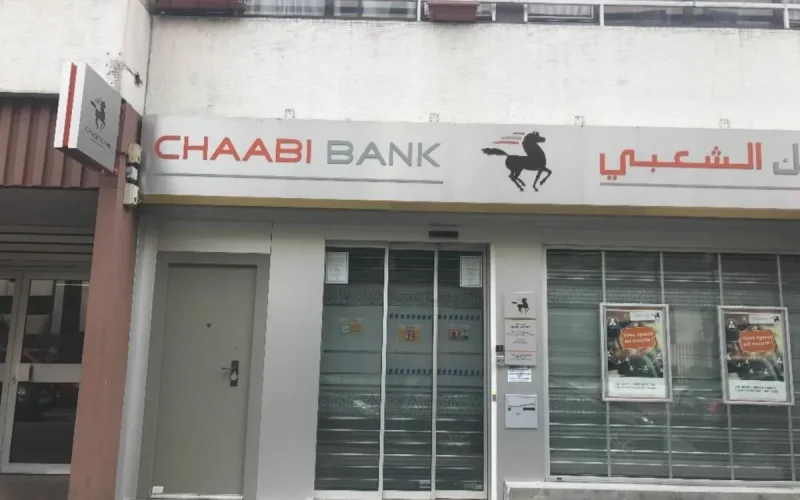
A former employee born in Morocco was still claiming 45 264 euros from Banque Centrale Populaire. After recalculating the accounts in a dispute that began in 2010, the Paris Court of Appeal concluded that, on the contrary, he owed the bank 38 845 euros when he sought to seize its assets.
The case originated in a professional relationship that began nearly half a century ago. The man, born in Morocco in 1955, was hired in November 1979 as a sales representative by Banque Centrale Populaire (BCP), before being assigned in 1983 to its representative office in France.
The termination of his contract triggered employment litigation, with the first claims dating back to November 2010. Since then, judgments, appeals, cassation proceedings and bank seizures have followed one another, with each party believing that the other still owed it money.
In February 2013, the Paris employment tribunal had ordered BCP to pay various sums to its former employee. He initially obtained 25 200 euros under the provisional enforcement order. A decision handed down on appeal in 2015 then enabled him to seize an additional 285 924,67 euros from the bank’s accounts.
But that judgment was entirely quashed in March 2017. The disappearance of the decision that had authorized the payment then gave BCP the right to restitution of the 285 924,67 euros.
Hundreds of thousands of euros paid and then recalculated
The case returned to several courts. After a new partial cassation in 2021, the Versailles Court of Appeal ultimately ordered the bank, in March 2023, to pay the former employee a total of 238 383,25 euros.
This sum included, in particular, 53 000 euros for dismissal without a real and serious cause, 51 426,76 euros in statutory severance pay, 45 000 euros for the harm suffered regarding his pension rights and 30 000 euros for the harm related to his unemployment benefits. Various amounts for notice pay and 37 066 euros corresponding to the reimbursement of pension contributions were added.
The issue was now to offset these awards against the sums already received on the basis of decisions subsequently annulled. BCP itself had had 33 881,87 euros seized from its former employee’s accounts in 2022.
In March 2024, the man and his wife in turn had 33 502,46 euros belonging to the bank seized from Natixis. They argued that BCP still owed them 45 264 euros, essentially in interest. The bank maintained, on the contrary, that it had a claim of 86 447,62 euros after set-off.
The Paris judicial court had initially assessed the former employee’s debt at 71 733,59 euros. On appeal, the Paris Court of Appeal reviewed all the payments, awards and interest in its judgment of 18 June 2026.
Its calculation produced a result that was less unfavorable to the former employee, but still contrary to the position he had defended: on 7 March 2024, the date of the seizure carried out against BCP, he was a debtor of 38 845,52 euros. He therefore could not seize the bank’s accounts as if he were its creditor.
The court consequently upheld the release of the seizure of 33 502,46 euros and rejected his claims for restitution of the 33 881,87 euros previously recovered by BCP, as well as another payment of 566,80 euros. It also ordered him to pay the bank 2 000 euros for its legal costs.
The judges nevertheless refused to definitively set his debt at 38 845,52 euros. This calculation was intended solely to determine the status of the accounts on the date of the disputed seizure. According to the court, Banque Centrale Populaire already has the necessary decisions to pursue recovery of the sums it still considers owed.
Sixteen years after the beginning of the litigation, the former employee and his former bank thus continue to bear the consequences of an exceptional succession of contradictory decisions, payments and subsequent annulments. The court also acknowledged the complexity of the proceedings, which may have led each party to consider itself legitimately the other’s creditor.
Related Articles
-

Undeclared, Ahmed, 22, dies on an asbestos roof: six months in prison for his employer
19 September 2026
-

Two prefectures sought to keep him out of France: this Moroccan father of two French children gets all decisions overturned
19 September 2026
-

Undocumented, this Moroccan man worked up to 60 hours a week and slept behind the grocery store
19 September 2026
-

Her Trips to Morocco Betray Her: €23,323 in RSA Benefits to Repay
18 September 2026
-

Tajine, pastilla, Oum and Acid Arab: Morocco takes over the heart of Paris for three days
18 September 2026