
Ceuta Crisis: 180,000 Travelers Checked in Italy, Only Eight Moroccans Turned Away
Italy checked more than 180,000 travelers arriving from Spain in August after the Ceuta crisis. In the end, only 31 people were turned away at the Italian border, including eight Moroccan nationals. Rome has nevertheless just extended its checks.
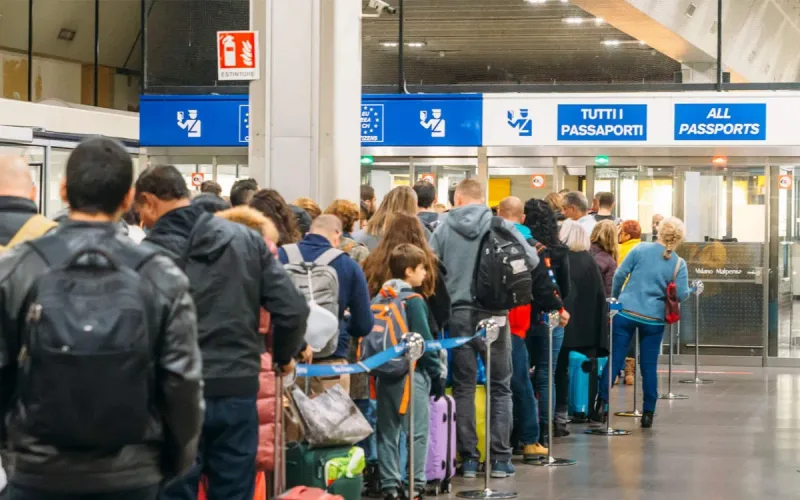
The first figures from the Italian measure are now known. Between August 1 and 31, nearly 500,000 travelers were checked against passenger lists, and more than 180,000 people arriving from Spain were identified when they entered Italy.
Despite the scale of the measure, only 31 decisions to turn people away at the border were made throughout the month. Eight concerned Moroccan citizens, according to data from the Italian Interior Ministry reported by Rai News and ANSA.
Six people were also arrested during the checks.
These figures give another dimension to the border checks reinstated between Italy and Spain. Rome had decided to reintroduce checks on August 1 at ports and airports for passengers arriving from Spain, immediately after the mass arrival of migrants in Ceuta on July 30 and 31.
On Bladi.net : Italy and Spain clash, Moroccans bear the brunt
The Italian government had notably cited security concerns and the risk that some of the people who entered Ceuta could subsequently travel within the Schengen Area.
The results of the first month nevertheless appear very limited in view of the number of travelers checked. Of more than 180,000 people physically identified upon arrival from Spain, 31 were ultimately turned away, or approximately one person in 5,800.
And among those 31 people, only eight were Moroccan.
Rome nevertheless extends the checks
Despite this record, Italy decided to maintain the measure for an additional fifteen days.
Italian Interior Minister Matteo Piantedosi explained the extension by the assessment conducted by the committee responsible for analyzing immigration and border security. According to him, the reasons that led Rome to reinstate the checks have not yet completely disappeared.
The minister nevertheless hopes that this will be the final extension. He notably acknowledged the efforts undertaken by Spain and the European Union to normalize the situation in Ceuta.
The Italian decision continues to irritate Madrid. The Spanish government disputes the idea that the tens of thousands of people who entered Ceuta now constitute a threat to the Schengen Area. Spanish authorities maintain that the migrants still present in the city cannot freely reach the peninsula.
The crisis reached an exceptional scale on July 30 and 31. Spanish intelligence had initially detected only a few thousand people planning to cross before 72,000 people ultimately crossed the Ceuta border.
On Bladi.net : The CNI had identified 2,000 people near Ceuta; 72,000 ultimately crossed the border
Since then, a very large proportion of these people have returned to Morocco. Madrid says that nearly nine out of ten have already left, while several thousand still remain in the autonomous city, including many minors.
The dispute between Rome and Madrid nevertheless extended well beyond Ceuta. In response to the Italian checks, Spain itself introduced checks on travelers arriving from Italy and has also just extended its measure.
One month after the beginning of the standoff, the Italian figures now make it possible to assess its results concretely: nearly half a million passengers checked against lists, more than 180,000 people checked upon arrival, but only 31 people turned away. And among them, eight Moroccans whose route cannot at this stage be linked to Ceuta.