All of Morocco’s gas still passes through Spain, but volumes fall sharply at the end of August
Gas volumes transported from Spain to Morocco fell sharply in the second half of August. The nearly one-third decline came after the summer peak in electricity consumption, while the Kingdom remains dependent on Spanish infrastructure to import its LNG.
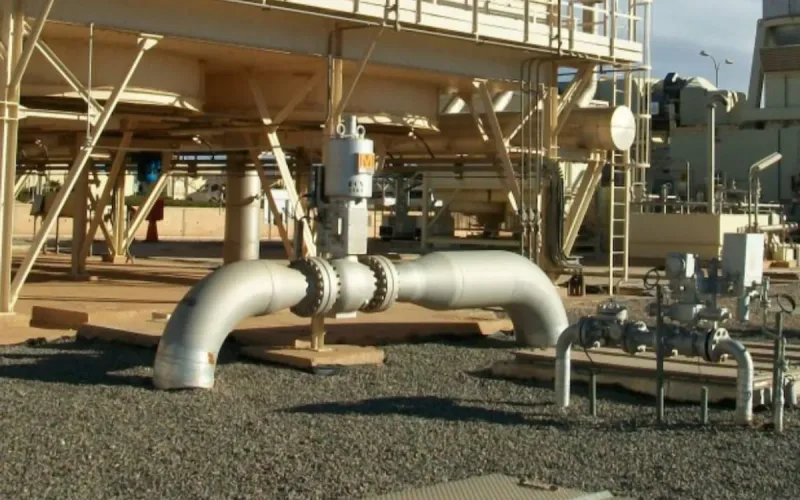
The decline is clearly visible in the records of Spanish grid operator Enagás. At the Tarifa interconnection, the entry point of the Maghreb-Europe Gas Pipeline (GME) into Morocco, flows fell from 30.57 GWh on August 14 to 27.16 GWh the following day, then to 23.88 GWh on August 16.
They fell further to 20.70 GWh on August 18, before stabilizing at around 20.3 GWh per day between August 19 and 23. Within a few days, the volume transported to the Kingdom had therefore declined by approximately one-third.
This development comes as Morocco’s energy dependence on Spain has received particular attention in recent weeks. But there is no indication that Madrid decided to deliberately reduce deliveries.
On Bladi.net : Amid crisis with Spain, Morocco depends on it for 8 % of its electricity
According to gas-sector sources cited by El Español, it is mainly the National Office of Electricity and Drinking Water (ONEE) that determines the required quantities based on the needs of Morocco’s electricity system.
Morocco still has no regasification terminal
The decline can thus be explained by the end of the summer consumption peak. Moroccan electricity demand had reached approximately 8,400 megawatts at the beginning of July, before falling back to around 7,400 MW on August 24. The gas-fired power plants in Tahaddart and Aïn Beni Mathar therefore have less need to operate at full capacity.
The arrangement nevertheless remains unusual. Morocco buys its liquefied natural gas on the international market, but still has no facility allowing it to regasify the gas directly on its territory. The LNG therefore arrives by tanker at Spanish terminals, where it is converted into gas before being injected into the network and then sent to Morocco through the GME.
Shell is one of the main players in this arrangement and has a contract with ONEE. The gas may come from different international suppliers: Spain primarily serves as a reception, regasification and transit platform.
At Tarifa, Enagás currently sets the maximum technical export capacity to Morocco at 32 GWh per day. The gas pipeline operates in the opposite direction to the one used until 2021, when Algerian gas crossed Morocco to reach the Iberian Peninsula.
On Bladi.net : Morocco Freezes Nador Gas Project as Spain Energy Dependence Deepens
This dependence on Spanish infrastructure is likely to continue for some time. Morocco is seeking to develop its own gas capacities and had notably planned a floating storage and regasification unit at Nador West Med, but this project was suspended in early 2026.
The decline observed in August therefore does not, at this stage, reflect a closure of the Spanish “tap.” It does, however, show that as long as Morocco lacks its own regasification infrastructure, the gas it buys abroad will continue to take an obligatory detour through Spain before crossing the strait.