Ten years after the Brussels attacks: A survivor meets Mohamed Abrini in his cell
Ten years after the Brussels attacks, Christelle Giovannetti, a survivor of the Maelbeek station, met Mohamed Abrini in prison. This restorative justice approach aims to understand the terrorist’s journey, beyond the judicial verdict.
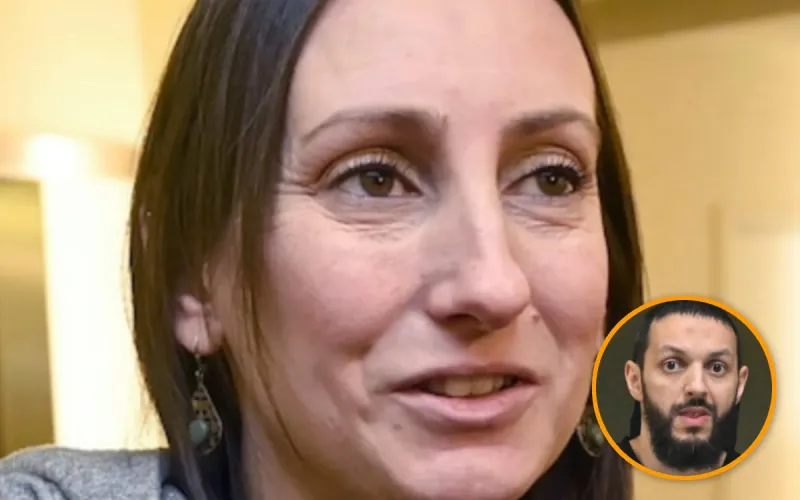
Christelle Giovannetti has initiated a direct dialogue with one of the convicted perpetrators of the March 22, 2016 attacks, Mohamed Abrini, nicknamed "the man in the hat". This approach was realized through the ASBL Médiante and the collective "Retissons du lien", after several months of rigorous preparation.
According to SudInfo, the objective of this meeting was neither to obtain apologies nor to grant forgiveness. For this survivor, it was above all a matter of understanding the trajectory of the man behind the cell and the ideology, without ever questioning the decision of the Belgian justice system. Restorative justice at the heart of the dialogue between victim and convict
During exchanges that she describes as "philosophical", the two interlocutors discussed their childhood and respective family environments. Christelle noted unexpected commonalities, such as the loss of a brother or sister, despite worldviews that have radically diverged in adulthood.
Sentenced to 30 years in prison for his participation in the attacks in Brussels and Paris, Mohamed Abrini would now assume responsibility for his actions. Christelle describes an educated man, reading extensively, who seems to have taken a step back and now expresses remorse for his criminal path.
The process remains strictly voluntary and does not affect the execution of the sentence, a crucial point for the detainee who feared that his approach would be perceived as a legal calculation. For the survivor, finding herself face to face with the human being allows her to go beyond the vision of "completely different monsters from us".
This experience has allowed the young woman to reach a form of inner peace ten years after the Maelbeek tragedy. While the book of the attacks is not definitively closed, she confides that this dialogue has allowed her to turn an essential page in her personal reconstruction.