
Morocco vs Canada: Tactical Eleven to Exploit Weaknesses
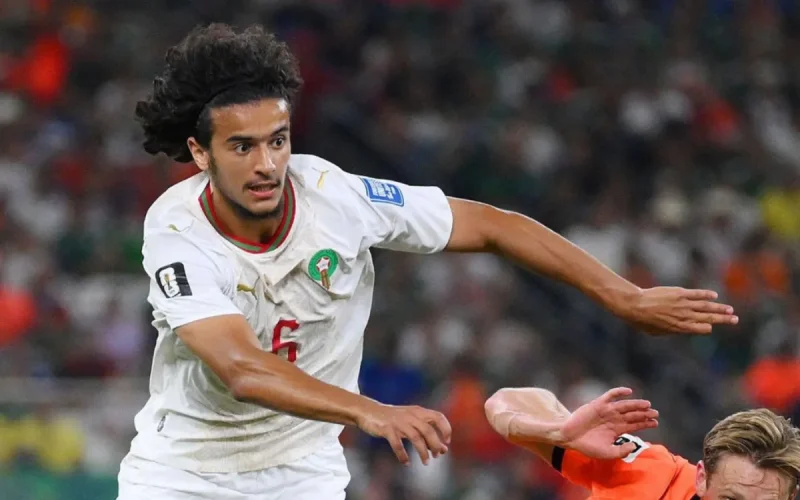
Against Canada, Morocco must avoid the trap of an overly open match. Opta figures argue for a dense, mobile eleven capable of pressing quickly under pressure. The objective: close down Canadian corridors, then attack the spaces left behind them.
Morocco now knows the profile of its round of 16 opponent. Canada is a team of volume, width and intensity. They cross frequently, push their fullbacks very high and seek to install repeated waves in the opposing box. For the Lions of the Atlas, the response must therefore not only be technical. It must first be structural.
On Bladi.net : Morocco exploits Canada’s defensive weaknesses in World Cup clash
The Opta figures from Morocco’s four matches provide a clear indication: Morocco is stronger when it maintains a dense core in midfield, with players capable of running, recovering and distributing cleanly. Against Canada, the most coherent idea would therefore be a 4-3-3 adjustable to 4-1-4-1, with an eleven designed to resist Canadian pressure periods and quickly attack the liberated corridors.
The most balanced eleven would be: Yassine Bounou in goal; Achraf Hakimi, Ismaël Diop, Chadi Riad and Noussair Mazraoui in defense; Sofyan Amrabat as a defensive midfielder; Neil El Aynaoui and Ayyoub Bouaddi as relayers; Bilal El Khannouss and Brahim Diaz around Ismael Saibari, used as a mobile forward.
Hakimi and El Aynaoui, the two certainties
Achraf Hakimi is the obvious choice. His Opta ratings tell his influence: 8.42 against Brazil, 8.12 against Scotland, 10.00 against Haiti, then 9.30 against the Netherlands. He is both Morocco’s primary accelerator and one of the best guarantors of defensive balance. Against a Canadian team that leaves spaces behind its fullbacks, his corridor can become a decisive weapon.
Neil El Aynaoui is the other certainty. His consistency is remarkable: 7.96 against Brazil, 8.90 against Scotland, 7.76 against Haiti and 9.18 against the Netherlands. He brings volume, defensive activity, presence in duels and passing quality. Against Stephen Eustáquio, the engine of Canadian play, his role will be central. He must prevent Canada from establishing its rhythm.
Ayyoub Bouaddi also deserves to start. His figures show real cleanliness in circulation: 66 passes against Brazil, 64 against Scotland, 60 against the Netherlands. Against Canadian pressing, this profile is valuable. Morocco will need a player capable of moving the ball without panicking, breaking the first line and quickly serving the corridors.
The choice of Amrabat responds to a tactical necessity. Canada attacks with many players, insists on second balls and multiplies crosses. Without a defensive midfielder in front of the defense, Morocco risks being drawn in. Amrabat allows protection of the axis, covering the runs of Hakimi and Mazraoui, and securing transitions.
Up front, Saibari offers more guarantees than an overly fixed striker. He scored against Brazil, Scotland and Haiti. His interest is not only in finishing: he can drop deep, fix a center-back, open a corridor and attack the box in a second phase. Against Canadian center-backs, this permanent movement can hurt more than a frontal duel.
Brahim Diaz keeps his place for a simple reason: Morocco will need breathing room. Even when his figures are not the most spectacular, he remains capable of keeping possession under pressure, drawing a foul and giving time to the block. El Khannouss can attack the half-space, especially on the right side with Hakimi. This is an area Canada may struggle to control when its fullbacks push high.
Rahimi and El Kaabi would then be second-half weapons. Rahimi to attack depth if Canada exposes itself. El Kaabi if the match is played in the box and Morocco must finish on crosses or set pieces. Ounahi can also become useful for calming the game, keeping possession more and breaking the Canadian rhythm.
On Bladi.net : Neil El Aynaoui Morocco World Cup Star Statistics
The trap would be to field too early a purely offensive team. Canada thrives on duels, crosses, clearances and second waves. To hurt them, Morocco must first hold the structure, then strike with precision. The right eleven is therefore not necessarily the most flamboyant. It’s the one that allows survival of Canadian intensity before attacking their spaces.
Related Articles
-

Ebnoutalib turns his back on Morocco, Ouahbi responds sharply
17 September 2026
-

Spain wants to avoid another Lamine Yamal case with this Moroccan Barça gem
17 September 2026
-

Sofyan Amrabat refuses to play for Morocco, Ouahbi responds: “The past grants no privileges”
17 September 2026
-

Dutch football mourns Ahmed Ammi, born in Morocco and dead at 45
16 September 2026
-

Hakim Ziyech wants to return to Morocco: “I don’t want to demand a place, I want to earn it”
15 September 2026