
Morocco UNESCO zellige heritage battle against Algeria
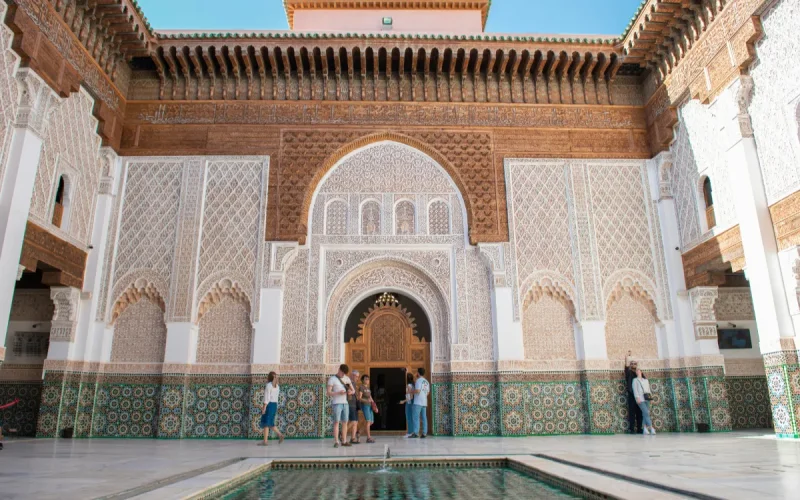
After the caftan, zellige is becoming a new battleground between Morocco and Algeria. Rabat is preparing a response to UNESCO to defend an art form carried for centuries by Moroccan maalems and an entire artisanal sector.
Morocco does not want to see zellige follow the same path as other symbols of its heritage contested by Algeria. After the battle over the caftan and the Adidas jersey affair involving the Algerian national team, Rabat is mobilizing to defend this Moroccan know-how before UNESCO.
On Bladi.net : Algeria’s Cultural Misstep: Moroccan Zellige Controversy Erupts at Expo 2025
The tension arose from Algeria’s candidacy aimed at registering "the art of architectural ornamentation in zellidje" on the intangible cultural heritage of humanity. For Morocco, this approach resembles another attempt to appropriate an art deeply linked to its history, its ancient cities, and its artisans.
In a report dedicated to this heritage battle, Le Figaro recalls that the issue caused a shock in Rabat, where authorities are now preparing their own file to have Moroccan zellige recognized.
The Adidas precedent remains fresh in everyone’s memory. In 2022, Morocco had protested against Algerian jerseys inspired by zellige motifs, already seeing it as cultural appropriation. The controversy had prompted Rabat to send a cease-and-desist letter to the brand, before an agreement was reached.
Rabat prepares its file
Morocco now hopes to present its file to UNESCO in 2027. The objective is clear: to have zellige recognized as living Moroccan heritage, transmitted by generations of maalems and still present in the mosques, palaces, medinas, fountains, and traditional houses of the kingdom.
Fès, Tétouan, and Marrakech occupy a central place in this sector. These regions provide the clay, the artisans, and the know-how that still allow today the production of these mosaics according to ancient techniques. In Fès, the maalems draw, cut, and assemble the fragments by hand, in slow and precise work.
Zellige is not merely decoration. It represents a Moroccan aesthetic, an economy, and a transmission. The sector counts several thousand specialized artisans and also works for mosques in the Gulf, private residences abroad, and luxury boutiques in Europe. For the city of Fès alone, exports related to this sector would reach 256 million dirhams.
Facing the Algerian candidacy, Morocco accelerated its response. Labels, regional inventories, training, protection of intangible heritage: the ministries of Culture and Crafts are seeking to legally and culturally lock down a know-how that the kingdom considers one of its strongest markers.
The file therefore goes beyond a simple decorative dispute. For Rabat, it is about preventing Moroccan heritage from being claimed elsewhere, even as Moroccan artisans continue to produce it, restore it, and make it shine around the world.
On Bladi.net : Zellige: Morocco Fights Back at UNESCO Against Algeria
After the caftan, zellige thus opens a new cultural battle between Morocco and Algeria. This time, Rabat wants to arrive armed: with archives, artisans, an organized sector, and a candidacy capable of reminding that Moroccan zellige is not a borrowing, but an inheritance.
Related Articles
-

MRE: this mistake when buying in Morocco can block the repatriation of your money
18 September 2026
-

One ship every five minutes between Morocco and Spain: Rabat seeks new rules for straits
18 September 2026
-

8.2 million dirhams for new vehicles tasked with monitoring Moroccan airport runways
18 September 2026
-

2030 World Cup: Fitch warns Morocco that cost overruns could increase its debt
18 September 2026
-

Six stations for 480 million dirhams: the LGV project transforms the Kénitra–Casablanca corridor
17 September 2026