Moroccan Soldiers Suffered More Than 1,000 Casualties Defending Paris in 1914
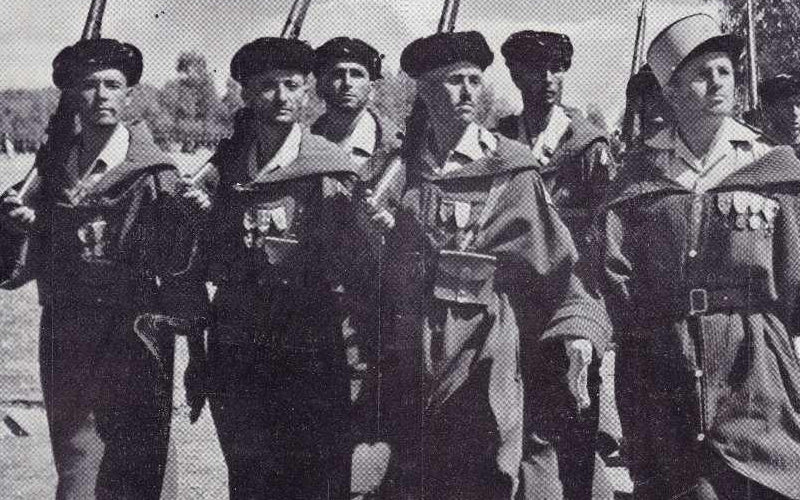
In September 1914, some 4,300 soldiers from Morocco took part in the Battle of the Marne, helping to halt the German advance toward Paris at the cost of heavy losses. One hundred and twelve years later, Sciences Po is devoting an exhibition to their service in the First World War.
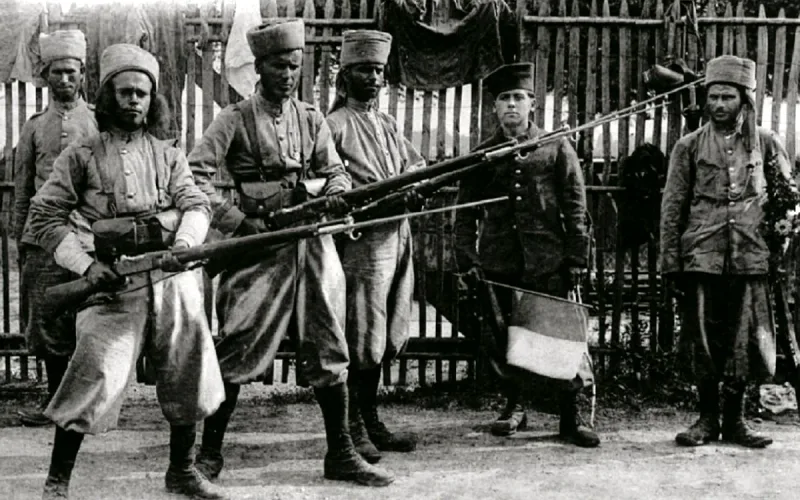
On August 16, 1914, a Moroccan brigade of 4,338 soldiers and officers landed at the port of Sète in southern France. Made up of five battalions divided between two regiments, it gradually joined the front northeast of Paris. Morocco had been under French protectorate since 1912.
On September 5, Moroccan soldiers were deployed near Penchard and Neufmontiers, in Seine-et-Marne. They were tasked with taking the heights of the Bois du Télégraphe, held by the German army. The two regiments attacked without artillery support or machine guns and came under particularly deadly fire.
Within a few hours, more than a thousand men had been killed, wounded or reported missing. The assault failed, and the survivors had to retreat. The brigade resumed fighting the next day, notably around Chambry. Its engagement was part of the First Battle of the Marne, during which French and British forces managed to halt the German offensive.
According to the Seine-et-Marne Departmental Archives, only 1,800 men in the brigade remained fit for service after these battles. The unit, having suffered heavy losses, was disbanded on September 23, 1914, and reorganized as a marching regiment of indigenous riflemen.
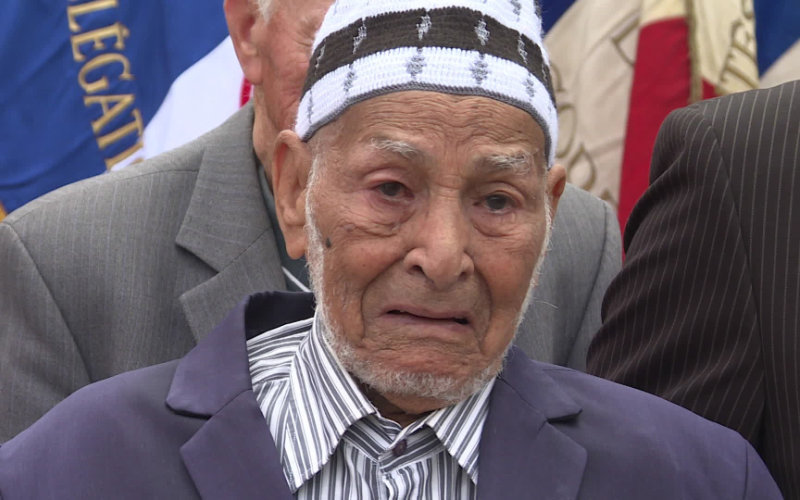
The memory of these soldiers lives on in several French towns. In Penchard, a commemorative plaque honors, among others, 146 Moroccan tirailleurs who fell in the battles of September 5 and 6. In 2021, apprentices from Seine-et-Marne also created memorial steles for Oujda and Taourirt, with the support of the Mémoire France-Maroc association.
On Tuesday, November 10, 2026, the association is taking part in an exhibition organized by Sciences Maroc Paris at Sciences Po. Uniforms, photographs, period objects and history books trace the soldiers’ journey. The exhibition is open from 9 a.m. to 5 p.m. in the Petit Hall at 27 rue Saint-Guillaume, Paris.