
A 1402 Letter Reveals Leonardo da Vinci’s Grandfather Traded in Morocco
A letter dated 1402 recounts an Italian merchant’s business dealings in Fez, involving pepper, wax and valuable dyes. Its author was none other than Leonardo da Vinci’s grandfather. This little-known story will be presented on October 20 at the Italian consulate in Casablanca.
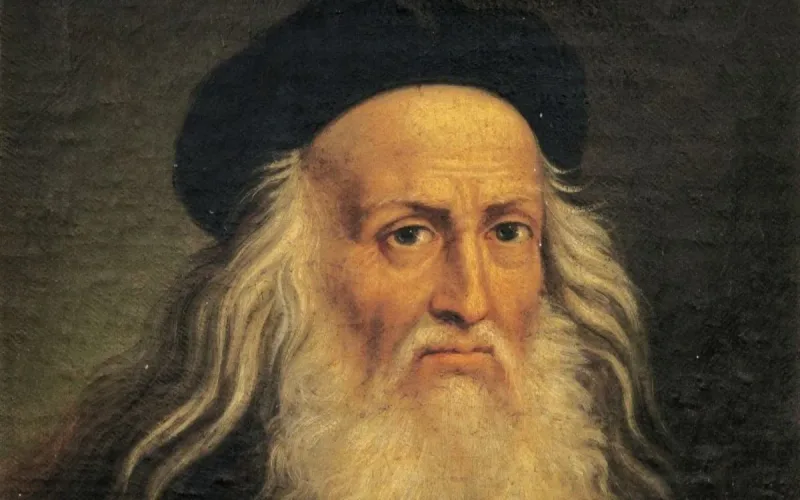
On May 1, 1402, an Italian merchant puts pen to paper in Alcudia, a port on Morocco’s Mediterranean coast, near present-day Nador. In a letter to a commercial official based in Majorca, he describes his business in Fez, his purchases and his trade in goods. The man’s name is Antonio da Vinci. Fifty years later, he would record the birth of his grandson, Leonardo, the future creator of the Mona Lisa.
This correspondence, preserved in Italian merchant archives and identified by researcher Alessandro Vezzosi, reveals a long-overlooked chapter in the family history of the Renaissance genius. Antonio di Ser Piero da Vinci was not simply a landowner in Tuscany. He had also travelled around the Mediterranean to trade, long before his famous grandson was born.
His journey to Morocco first took him to Alcudia de Barbarie, then an important trading post frequented by Christian, Muslim and Jewish merchants. The port served as a gateway to inland markets, particularly those of Fez. There, Antonio negotiated the sale of several goods sought after in European markets.
In his letter to Cristoforo di Bartolo Carocci, an official of a company linked to the powerful Florentine merchant Francesco Datini, he details his transactions. They included Guinea pepper, lacquer, alum and tartar, used in particular for dyeing and treating textiles and leather. He also mentions wax from Morocco’s Gharb region.
A merchant grandfather little known to historians
Antonio’s business dealings did not stop in Morocco. In March 1404, he was in Barcelona, where he represented his cousin Frosino, who was also involved in Mediterranean trade. His duties included collecting taxes from Italian merchants on the passage of goods.
These documents have upended the image historians had of Leonardo’s grandfather. A 1427 tax declaration described him as a man with no particular profession, living off his properties. His commercial activities in Morocco and Spain remained in the shadows until research by Alessandro Vezzosi and Agnese Sabato, published in 2019 in their book on the origins of the da Vinci family.
The two researchers drew in particular on the Datini collection, held at the State Archives of Prato, in Tuscany. This collection of commercial correspondence makes it possible to reconstruct the ties Italian merchants maintained with ports and major cities around the Mediterranean basin in the early 15th century.
On Bladi.net : How Moroccan couscous conquered Egypt 700 years ago
The story is now back in the spotlight in Morocco. According to the Italian news agency ANSA, Alessandro Vezzosi and Agnese Sabato will present their book “Genìa da Vinci” on Tuesday, October 20, at 6 p.m. in the Garibaldi Room of the Italian Consulate General in Casablanca, as part of the 26th Week of the Italian Language in the World.
The consulate sees this 1402 voyage as a precursor to current commercial exchanges between the two countries. In its statement, it notes that Leonardo’s grandfather was welcomed in Morocco with “great friendship and hospitality,” nearly ninety years before Christopher Columbus’s first voyage to the Americas.