US Imposes 19.97% Tariff on Moroccan Phosphate Fertilizers, OCP Loses Trade Battle
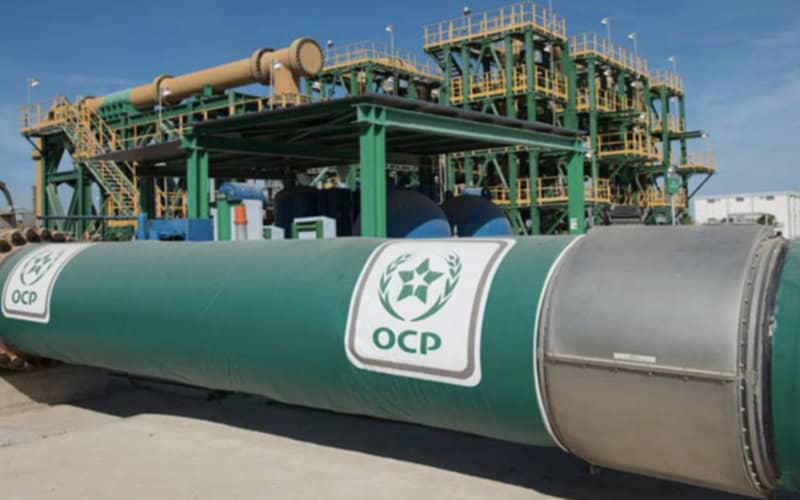
The Office Chérifien des Phosphates (OCP) lost its battle against its local competitor, Mosaic, which had initiated, under the Trump administration, a procedure for the imposition of customs duties on fertilizer imports from Morocco. This is now confirmed under the Biden administration.
Seized by Mosaic in June 2020, the U.S. International Trade Commission (ITC) made its decision last Thursday, March 11. It confirmed the imposition of a 19.97% customs duty on imports of phosphate fertilizers from the Moroccan giant OCP into the country "for at least five years," reports Jeune Afrique. The arguments put forward by the group were to no avail. "This decision comes despite the arguments presented by the group on the lack of grounds for the imposition of these duties," reacted OCP.
The group had called on the services of three consulting firms in the United States to defend its position and launched a petition of support. To no avail. "We are determined to continue serving American farmers and are now examining the most appropriate options," OCP added. This group, which has had a subsidiary in the United States since 2016, has not yet communicated on whether it will remain in the country or not. According to the rating agency Fitch, Morocco was the largest exporter of MAP and DAP [main phosphate fertilizers] to the United States last year, accounting for 60% of imports, followed by Russia with 25%.
Since the start of the procedure and pending its outcome, OCP had suspended its sales on the American market. With the ITC’s decision, the question arises as to whether Morocco will be able to return to this market. Its local competitor Mosaic, who initiated the procedure, is pleased with the decision. According to the American operator, this decision recognizes that imports from OCP (but also from two Russian groups, EuroChem and PhosAgro, also targeted by the procedure) have "caused injury to the American phosphate industry" by constituting "unfair competition" through "subsidized" imports.
However, this decision will have a negative impact on the American market, as Mosaic alone cannot meet the entire local demand. "This closes efficient supply channels to the U.S. market, such as Morocco, forcing us to import from other countries like Australia," commented Josh Linville, an American analyst at StoneX and a fertilizer market specialist. Another consequence: a rise in selling prices to farmers.