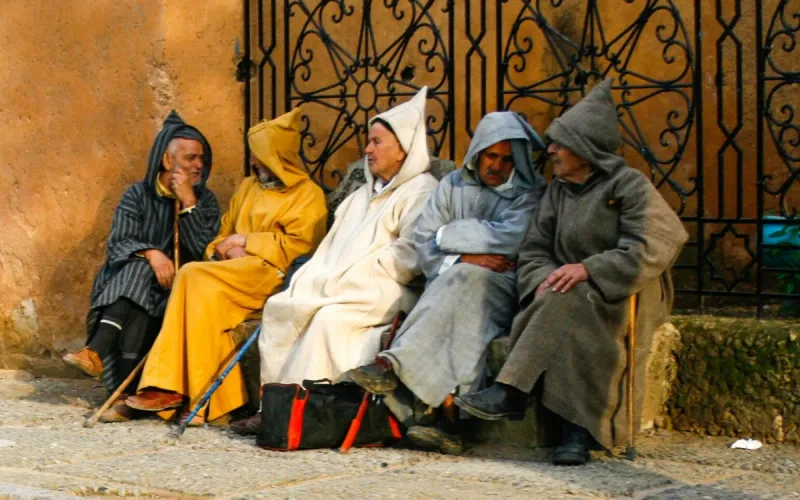
More than half of Moroccan-born seniors in the Netherlands struggle with mobility, sight or hearing
Walking, seeing or hearing is difficult for a majority of seniors born in Morocco and living in the Netherlands. An official Dutch study finds that 56% of them have functional limitations, more than twice the proportion among older people born in the country.
Walking 400 meters, reading small print or following a conversation: everyday actions that can become real obstacles. According to a study published on September 29 by Statistics Netherlands (CBS), 56% of people aged 55 and over who were born in Morocco report at least one significant limitation related to sight, hearing or mobility. Among people of the same age born in the Netherlands, the proportion falls to 22.1%.
The gap is considerable. Researchers are not referring to minor, passing discomfort, but to people who have great difficulty carrying out certain activities or are unable to do so, even with aids such as glasses or a walker.
On Bladi.net : Moroccan Retirees in the Netherlands: Their Children Forced to Pay the Bills
The situation of Moroccan seniors is closer to that of people born in Turkey, 61.9% of whom have similar limitations. It is considerably less favorable than that of people from Suriname (40.9%) or Indonesia (24.6%).
These findings come from national surveys conducted in 2012, 2016, 2020 and 2024, with the data combined to allow a reliable comparison between different communities of foreign origin.
Only 31.6% of Moroccan seniors say they are in good health
Self-reported health confirms these difficulties. Among older people born in Morocco, only 31.6% rate their health as good or very good. The proportion reaches 68.5% among seniors born in the Netherlands, more than twice as high. People from Turkey report a comparable figure to Moroccans, at 30.1%.
This vulnerability affects an aging community. In 2024, the Netherlands had 70,639 residents aged 55 and over who were born in Morocco, compared with 35,917 in 2012. They had lived in the country for an average of 37.4 years. Their health situation adds to already documented economic difficulties: one in five seniors born in Morocco lived persistently below the social minimum in 2024, compared with 1.8% of older people born in the Netherlands.
The survey also highlights another phenomenon: 22.1% of seniors born in Morocco suffer from severe or very severe loneliness, compared with 9.1% of their contemporaries born in the Netherlands. CBS notes that physical limitations can reduce independence and make it harder to take part in social activities, two essential aspects of daily life for this generation.