Five Children Challenge Father’s Gift of French Home to Their Three Half-Siblings
A man of Moroccan origin had named three of his children as his sole presumptive heirs in a property gift. After his death, five other children challenged the deed in French court. The Rouen Judicial Court has now ordered the estate to be divided.
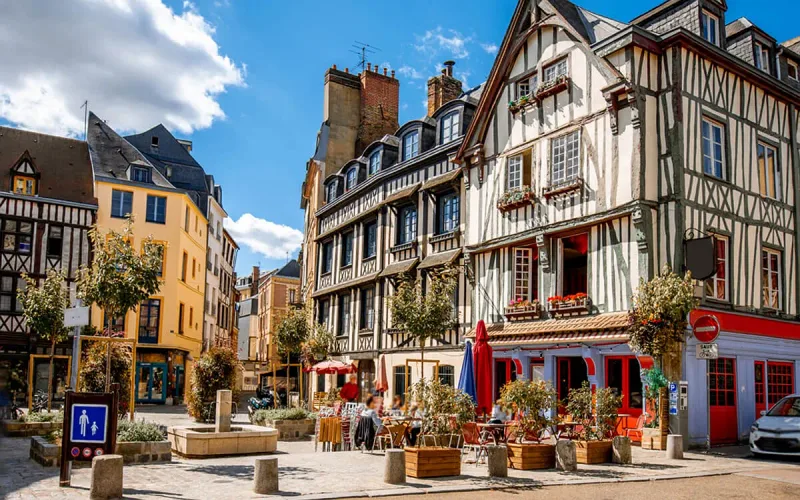
In December 2005, a man born in Morocco in 1942 and his wife gave a house in France to their three children together. In the notarized deed, signed on December 16 and 26, they declared that the beneficiaries were “their only children and sole presumptive heirs.” However, the father also had five children from another relationship, all born in Morocco between 1965 and 1980.
On Bladi.net : French Court Orders Disclosure of Moroccan Estate Documents in Family Inheritance Dispute
The second wife died in 2017, followed by the father in 2020. The five other children filed a case with the Rouen Judicial Court in 2025. They sought a court-ordered division of the estates, a reduction of the gift made to their three half-siblings and, if necessary, the sale of the house. They also asked the court to consider compensation for the beneficiaries’ occupation of the property.
To establish their parentage, the claimants submitted several birth certificates, as well as a document described as a family record book in Arabic, without a translation. The judges found that the documents established the deceased’s paternity of all eight children. The three beneficiaries of the gift, who were also served with the lawsuit, did not appoint lawyers.
A contested gift, but an estate still to be assessed
In its ruling of October 15, 2026, the court found that French law applied, as both deceased individuals had their habitual residence in France. This criterion is decisive in international inheritance cases: another case recently heard in France led to Moroccan law being applied because the deceased habitually resided in Morocco.
With eight children, the judges noted that the father could freely dispose of only one quarter of his estate. The remaining three quarters constitute the forced heirship reserve, which protects the rights of his descendants. The 2005 gift must therefore be assessed in light of the deceased’s assets as a whole and the inheritance rights involved.
The five claimants argue that the house was the only asset their father left behind. The judges, however, found that the available evidence was not yet sufficient to determine the exact makeup of the estate or assess whether the forced heirship reserve had been infringed. They also noted that the three beneficiaries’ exclusive occupation of the house had yet to be established.
On Bladi.net : She Declares Herself a Widow While Her Moroccan Husband Is Alive, Then Leaves Everything to Her Nephew
The court ordered the opening of estate settlement and division proceedings and appointed a notary to oversee them. The notary may consult the FICOBA, FICOVIE and AGIRA banking databases, investigate the estate’s assets and assess any potential compensation for occupation. The notary must prepare a proposed division within one year and give an opinion on whether the gift should be reduced. The request to sell the house remains pending because there is no sufficiently recent property valuation.