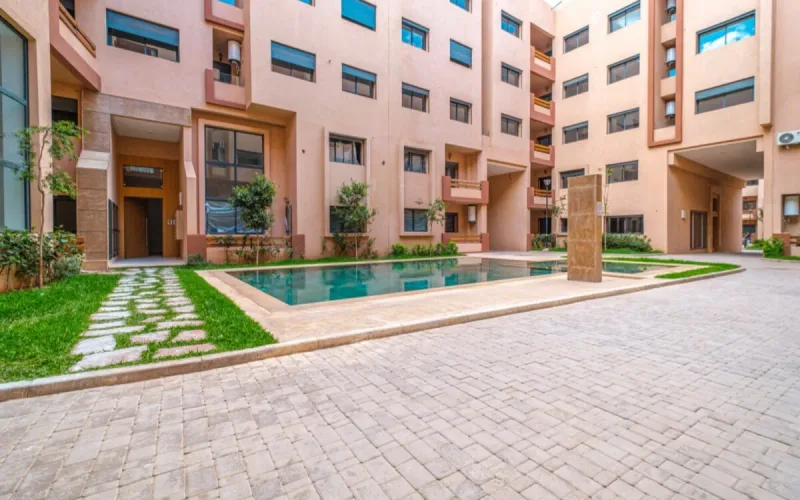
Dutch Court Blocks Sale of Moroccan Home After Finding It Is Now in Daughter’s Name
A man wanted to force his ex-wife to sell a house in Morocco so he could recover half its value. But documents relating to the Moroccan property turned the case around in a Dutch court. The court partially ruled against him.

He had nevertheless won his case in September 2024. The The Hague Court of Appeal had ruled that the house in Morocco, although registered in his ex-wife’s name, belonged to the couple’s joint assets. The property was to be sold and the net proceeds divided equally. But more than a year after that decision, no sale had taken place.
On Bladi.net : Her apartment in Morocco is valued at 120,000 euros: she owes her ex 60,000 euros in the Netherlands
In November 2025, the man sought enforcement of the ruling. His former wife told him she was no longer the owner of the house and therefore could neither have it appraised nor sell it. Her ex-husband argued that this was no defense: the court ruling was final, and he said he had never authorized the donation of the property to their daughter.
The case took a different turn when the woman produced several Moroccan documents, accompanied by certified translations. A notarized deed dated January 2, 2019, a land registry extract tracing the property’s history, and a land certificate indicated that the house had been given to their daughter and was now registered in her name. These documents had not been presented at the previous trial.
A house in Morocco that the court cannot order sold
In its April 8, 2026 ruling, the The Hague court found that, at this stage, the documents sufficiently established that the house was registered in the daughter’s name. Even though her former husband disputes the validity of the donation, his ex-wife no longer has the power to sell the property. The judge therefore refused to force her to sell it and divide the proceeds.
But the woman did not win outright. The 2024 ruling remains in effect, and the court found that the change of ownership does not prevent the house from being appraised. The former wife must propose three real estate agents based in Morocco within two weeks of being served with the ruling. Her ex-husband will then have seven days to choose one.
On Bladi.net : A MRE has blocked a house in Morocco for six years; court orders her to pay 150 euros per day
The woman had also argued that she needed to travel to Morocco in person to find these professionals. The judge rejected that argument, noting that she already has contacts in the country and can conduct her search remotely.
She must work with her ex-husband to commission the appraisal within four weeks of the agent’s selection. If she refuses to propose professionals or cooperate with the appraisal, she risks a penalty of 100 euros per day for each of these two obligations, capped at 7,500 euros per obligation. Each former spouse will pay their own legal costs.