Air Arabia Maroc Fires Two Pilots After A320 Plunges to 12.5 Metres Above the Sea
An Air Arabia Maroc Airbus A320 descended to just 12.5 metres above the sea after taking off from an Italian airport. The final investigation report, published on November 6, 2026, reveals a series of piloting errors and the airline’s decision to fire both pilots.
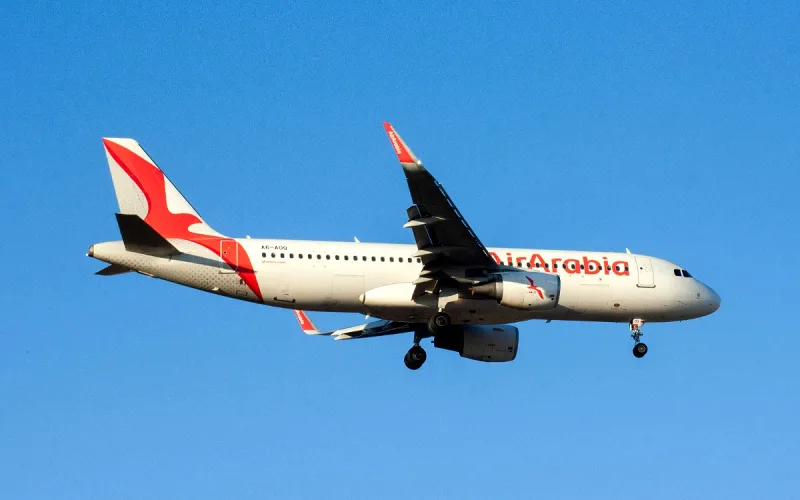
On September 20, 2025, at 11:57 p.m., an Air Arabia Maroc Airbus A320 came close to the surface of the Ionian Sea, thirty seconds after leaving Catania Airport in Sicily. The aircraft, registered as CN-NML, was then flying at about 500 km/h. On board flight MAC991, which was due to fly to Amman, Jordan, for scheduled maintenance, were two pilots and four cabin crew members, with no passengers. The aircraft managed to climb again and continued to its destination.
The investigation by the Italian Air Safety Agency (ANSV) traces the circumstances of this serious incident. Having arrived late from Casablanca, the aircraft had a 53-minute stopover in Catania before departure. The captain spent much of that time having a flight plan corrected that listed Palermo as the alternate airport for a flight to Jordan. The runway’s scheduled closure at midnight added to the pressure on the crew.
While accelerating on the runway, the pilots noticed an anomaly in the speed readings and guidance systems. The aircraft was then travelling at about 110 km/h, a speed at which the takeoff could still be aborted. The captain decided to continue, believing he could manage the situation. Investigators consider it likely that the reference speeds required for takeoff had not been entered into the flight computer.
A steep descent and ignored alarms
Once airborne, the captain gave instructions that gradually pitched the aircraft down towards the sea. The autopilot, activated for three seconds, followed a descent command and caused the aircraft to lose about 43 additional metres. Investigators point to a possible sensory illusion linked to the Airbus’s strong acceleration in darkness, above a sea with no visual reference points.
The “Sink Rate” and then “Pull Up” alarms sounded in the cockpit. The captain applied full engine power and pulled back on the control stick. Despite this manoeuvre, the aircraft continued to descend for a few seconds before reaching its minimum altitude of 12.5 metres.
Following the incident, Air Arabia Maroc terminated the employment contracts of both pilots, citing gross negligence. The Tunisian captain had logged 14 396 flight hours. His Moroccan co-pilot had 3 696 hours of experience. The ANSV attributed the incident to a temporary loss of situational awareness, compounded by operational pressure, procedures that were not adequately followed and possible spatial disorientation.
The investigation also found that the Airbus was using a version of the flight management software that could not flag the absence of takeoff speeds. Air Arabia Maroc has since accelerated software updates to its aircraft and stepped up simulator training. The ANSV recommends that the European Union Aviation Safety Agency consider this software modification for the entire Airbus A320 family.